2025 | Volume 26 | Issue 6
In this issue of Surgical News, we continue to spotlight the recipients of the 2025 Educator of Merit awards—an initiative of the Academy of Surgical Educators that celebrates excellence in surgical education across Australia and Aotearoa New Zealand.
Each year, the Academy recognises outstanding contributions in two key categories:
• SET Supervisor/SIMG Supervisor of the Year: Awarded in each Australian state/territory and Aotearoa New Zealand, this honour acknowledges exceptional support provided to Surgical Education and Training (SET) Trainees and Specialist International Medical Graduates (SIMGs).
• Facilitator/Instructor of the Year: This award recognises an exceptional contribution by a course facilitator/instructor teaching on Professional Development or Skills Education courses and is awarded to one facilitator/instructor across Australia and Aotearoa New Zealand.
In 2025, the Academy conferred five SET Supervisor/SIMG Supervisor of the Year awards and two Facilitator/Instructor of the Year awards.
We spoke to the winners about their surgical journeys.
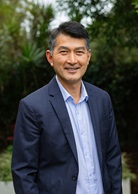
Dr John Gan, Vascular Surgery, FRACS
SET supervisor, NSW
Dr Gan is a consultant vascular surgeon with more than 20 years of experience, performing a wide range of open and endovascular procedures. He trained at leading hospitals in Sydney, Melbourne, and Glasgow, and holds Fellowships in Vascular and General Surgery with RACS. Since 2002, he has been based in Port Macquarie as supervisor of Vascular Surgical Training at the Base Hospital, while also serving as senior lecturer and examiner with UNSW Rural Clinical School. Passionate about education, Dr Gan has taught medical students and Trainees for more than two decades and has a special interest in integrating novel endovascular techniques into regional practice.
Highlights from his nomination
“Dr Gan is deeply committed to hands-on surgical education. His clinical workload is demanding as one of only two vascular surgeons servicing Port Macquarie. Yet he regularly goes above and beyond. Even when he is not on-call, if local patients present after hours, he will often review or operate on them personally. Importantly, he reaches out to Trainees, encouraging our involvement and allowing us to operate as the primary surgeon while he assists. His patient, unhurried teaching style ensures we learn not only the technical steps but also how to troubleshoot, adapt, and make sound operative decisions.”
“What really sets John apart is his commitment not just to technical skills, but to the full scope of surgical professionalism. He leads by example with his calm demeanour and excellent bedside manner, and he takes the time to teach these non-technical skills explicitly. Outside of work, he’s just as engaged—he invited me into his home for dinner, introduced me to the local surf club community, and created a sense of belonging in and out of the hospital.”
What inspired you to pursue surgical education?
“Working in a regional centre you sometimes feel you are a long way from the College. However, being a surgical educator means you can participate in a significant College activity without leaving the comfort of your own home. Surgical education is a bit of a cycle where Trainees become trainers, and it is a great privilege to be part of that process.”
What is your proudest moment as a surgical educator?
“What I love to hear about is how my previous Trainees are going now they are surgeons in their own practices. It's always a nice surprise to find out they are still using the techniques we demonstrated to them when they were training in our unit.”
Any advice for new surgical educators?
“We all have busy lives as surgeons and it's hard to remember what cases are on an operating list let alone the RACS 10 competencies in daily practice. Reflect on who you looked up to in your own training and what was good and bad and then try to create a nurturing training environment. As a trainer, be engaging and approachable and be a great role model for your Trainees to emulate.”

Dr Krinal Mori, General Surgery, FRACS
SET supervisor, Victoria
Dr Mori is a Melbourne-trained general surgeon based in Northeast Victoria, with public appointments at Austin Health and Northern Health. He lectures at The University of Melbourne and has a special interest in laparoscopic and gastrointestinal surgery, as well as hernia repair. Dr Mori manages a wide range of general surgical conditions—from emergencies and major procedures to common lumps, perianal diseases—and performs gastroscopies and colonoscopies. His patients benefit from a holistic approach, ensuring continuity of care from consultation through recovery.
Highlights from his nomination
“Krinal has always been supportive, friendly and approachable. Whenever a Trainee needs him, he will always be there and make his time available to meet up with me to discuss the difficulties or issues involved with my training. He will make effort to actively approach his Trainees and ensure they are on track.”
“Dr Mori is widely respected by colleagues and juniors alike for his clinical excellence, compassion, and commitment to RACS values. He consistently takes time to teach Trainees and junior doctors—on ward rounds, in theatre, and beyond—covering not only surgical techniques and pathophysiology but also wellbeing, research, and educational skills. He coordinates teaching opportunities for unaccredited Trainees and medical students and volunteers every second Friday to supervise the laparoscopic skills lab, supporting doctors in training and colleagues to enhance their skills.”
“Dr Mori as an exemplary surgeon, mentor and educator. It is rare to come across a surgeon who is beloved and respected by his colleagues as well as juniors, but Dr Mori achieves this. He provides exemplary care to all of his patients displaying compassion and excellence in clinical care and upholding the RACS values and competencies at all times. He always takes time be it on the ward round or in the theatre to teach Trainees and junior doctors. His breadth of teaching extends beyond steps of the operation and pathophysiology to wellbeing, research, and how to educate others. In his role Mr Mori also coordinates unaccredited Trainee teaching opportunities for medical students. In his own time, he volunteers every second Friday to supervise the laparoscopic skills laboratory where Trainees, doctors in training, medical students and our gynaecology colleagues can attend, learn and enhance their laparoscopic skills.”
What inspired you to pursue surgical education?
“When I was a junior (Trainee) I was privileged to work with some amazing mentors, and my inspiration came from them. Their ability to teach complex concepts clearly and guide me through situations was a significant motivation for me to do the same for future Trainees. Surgical education allows me to combine my passion for surgery with my commitment to mentorship, continuous learning, and improving patient outcomes.”
What is your proudest moment as a surgical educator?
“I feel proud when all my Trainees successfully complete surgical training and become competent surgeons. It is hard to pick the proudest moment, but this one stands out. A group of Trainees I had mentored introduced a peer teaching program within their hospital hub. Seeing them take ownership of education and encourage learning culture made me immensely proud.”
Any advice for new surgical educators?
“My advice to the surgical educators starting out is to approach teaching with the same preparation and commitment that we bring to an operating theatre. One should create a culture where Trainees feel comfortable asking questions and learning from mistakes. Develop and run an education program tailored as per the needs of the Trainees, so make it Trainee-focused. Seek feedback regularly from Trainees and peers (colleagues). Moreover, keep learning yourself, stay updated with educational methods, get advice and feedback from your learners.”
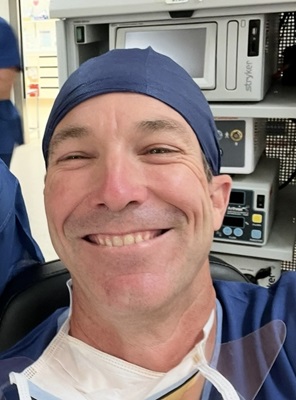
Dr Jonathan Mulford, Orthopaedic Surgery, FRACS
SET supervisor, Tasmania
Dr Mulford is an orthopaedic surgeon specialising in hip and knee surgery, including computer-assisted joint replacement, minimally invasive techniques, and joint-preserving procedures. He also performs complex ligament reconstructions and meniscal repairs using various graft types. With a Master’s from the University of London and research experience at Prince of Wales Orthopaedic Research Laboratory, he integrates innovation, research, and education into his practice. A dedicated educator, he lectures at the University of Tasmania, supervises Trainees at Launceston General Hospital, and has led surgical training initiatives in the Solomon Islands and Papua New Guinea. His clinical interests include orthopaedic trauma, wrist surgery, and advanced arthroscopic techniques.
Highlights from his nomination
“Dr Mulford has been unwavering in his support for me as an SIMG, for his international Fellows and for the junior IMGs working in our department. He selflessly devotes hours of his time to the necessary paperwork, supervising clinical activities and research. Despite the endless difficulties, problems, complications, complaints, delays and other assorted obstacles, I have never seen him lose his temper or act out. He is not only a driving force in regard to the international and national team members, he will undauntedly accept the most challenging referrals and cases in our community, pursues high quality teaching and research and balances this with the best times on the local park run, a devoted family life, an incredible garden and excellent ski form.”
“A specific trait of his that stood out was his attitude to patients. He always placed the care of patients as his first priority. His patients sense this and trust him implicitly. Besides being a mentor at the hospital, he was a great human outside. My year at Launceston was one that my family and I will never forget with a large part of this due to Jonathan.”
What inspired you to pursue surgical education?
“This has always been part of my practice, and I enjoy doing it.”
What is your proudest moment as a surgical educator?
“Seeing Trainees pass the Fellowship exam and seeing unaccredited registrars get on the training program.”
Any advice for new surgical educators?
“You learn from your Trainees just as much as you teach them. Great experience.”
If you’re passionate about clinical education, please consider joining the College as a Skills Course Instructor. These programs thrive thanks to the voluntary contributions of faculty from diverse medical disciplines, offered on a pro bono basis.
Stay tuned for more profiles celebrating the educators shaping the future of surgical excellence.