2025 | Volume 26 | Issue 6


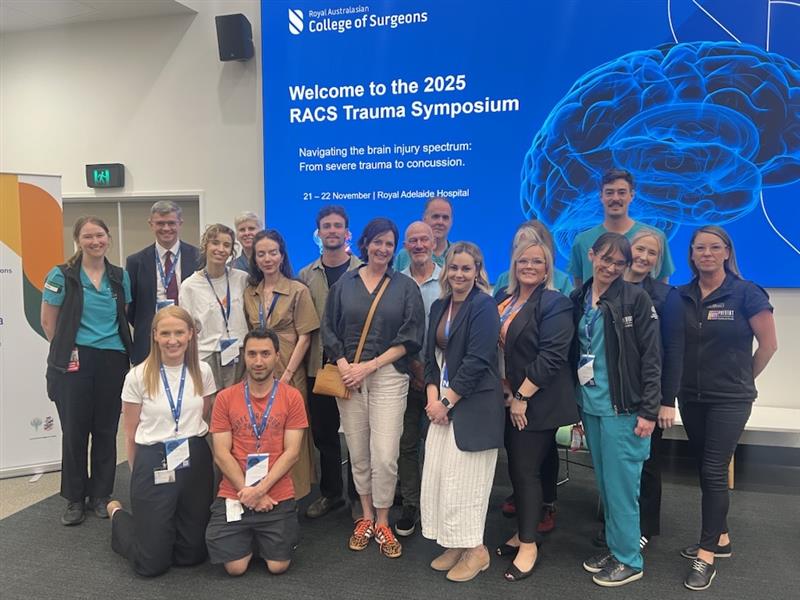
In November the Royal Adelaide Hospital (RAH) hosted the annual RACS Trauma Symposium, which brought together leading experts across surgery, emergency medicine, intensive care and rehabilitation from across Australia and Aotearoa New Zealand. Over two days, the symposium covered severe traumatic brain injury (TBI) to concussion by focussing on the mechanisms of injury, current treatment approaches, and emerging strategies for risk-reduction.
Day one opened with a Welcome to Country by Uncle Moogy ‘Major’ Sumner and welcome speeches from convenors, Dr Matthew Hope FRACS, Chair RACS Trauma Committee and Nicole Kelly, Trauma Service Nursing Director at the Royal Adelaide Hospital.
Professor Mark Fitzgerald, Director of Trauma Services at The Alfred Hospital, opened the sessions by highlighting the extensive number of clinicians and teams involved in treating a trauma patient within the first 24 hours. This was followed by sessions exploring the spectrum of care that is required in TBI management from pre-hospital to rehabilitation including TBI management, advanced imaging, and specialised care for children and older adults.
A highlight of the symposium was a session that focused on the patient recovery and rehabilitation through the powerful stories of Lauren and Georgina. They shared their experiences of living with traumatic brain injury and how it changed their lives forever. Their message was clear and earned a standing ovation: recovery requires not only a multidisciplinary approach and community support but also understanding through both the good and the difficult times.
As one attendee said, “The consumer guest speakers were so inspirational and amazing individuals. Very eye-opening content to what each individual and family goes through from the time of injury, acute care and rehab, and puts that all into perspective. Such fantastic content in all presentations.”
Day two shifted focus to TBI outcomes in sport and the community. Dr Elizabeth Clisby, Associate Professor Rowena Mobbs and David Maddocks unpacked the long-term impacts of repetitive head trauma, signs, and symptoms of chronic traumatic encephalopathy. This was followed by a panel discussion that addressed the diagnosis and treatment of concussion in both professional and community sporting settings.
Other conference highlights included Associate Professor Alistair Jukes FRACS’ presentation on brain injury in paediatric patients, Dr Adam Wells FRACS and Associate Professor Daniel Ellis’ presentations on leadership in trauma settings and Clinical Associate Professor Meredith Thomas, Tania Straga, and Dr Terry Nash’s insights into neurology, emergency imaging, orthoptics and retrieval medicine.
With almost 100 attendees, the symposium sparked valuable discussions and renewed commitment to applying insights in practice and advancing research.
The issues raised in this symposium will be further explored with a special forum being convened by RACS and the Neurosurgical Society of Australasia (NSA), led by leading concussion expert Professor Gavin Davis FRACS.
We’ve had a great response to those attending the event after asking them to share their learnings and highlights of the symposium.
Feedback on the symposium included:
“Fantastic. A wealth of knowledge shared across multi-disciplinary areas of healthcare. Would 100 per cent recommend attending.”
One attendee told us that they would “have more robust discussions on spectrum of head injury/concussion/post-concussive syndromes and discharge advice and management options” as a result of attending the symposium.
Dr Matthew Hope, FRACS said, “It was great to see so many clinicians come together to share ideas about how we can better support patients with their journey after experiencing a traumatic brain injury.”
Thank you to our convenors, Dr Matthew Hope FRACS, Nicole Kelly, RN and Dr Shivangi Jog FRACS for bringing together an informative program and speakers.
Thank you also to the bi-national Trauma Committee for their support of this event.