2026 | Volume 27 | Issue 1
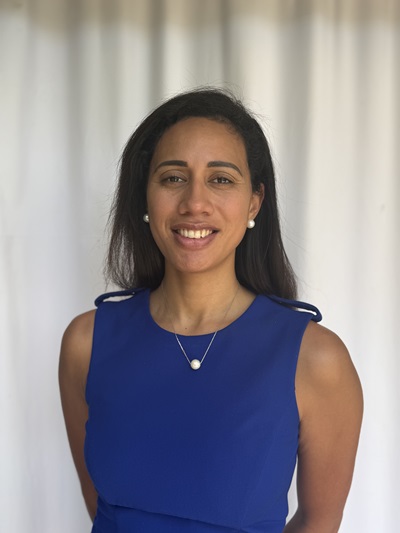
Dr Minella Lalloz is an unaccredited General Surgery registrar at Cairns Hospital researching outcomes of colorectal cancer surgery in Aboriginal and Torres Strait Islander patients.
Her project compares Indigenous and non-Indigenous patients in disease stage, treatment, and postoperative outcomes. Early findings suggest Indigenous patients may present later and experience more medical complications—highlighting the need for improved models of care, cultural safety, and outreach services. She hopes her research will help shape better healthcare delivery in regional and remote areas. Eventually, she aims to use these insights to guide her future practice as a remote general surgeon in northern Australia and the Torres Strait Islands.
Dr Lalloz’s path north
When Dr Minella Lalloz received the RACS 2025 Rural Junior Doctors Surgical Skills Course grant, it supported something very specific—hands-on training. The grant enabled her to complete the Early Management of Severe Trauma (EMST) course, thereby gaining a critical set of skills required by many doctors working in regional Australia.
“This course is incredibly important, not only doctors pursuing a career in surgery, but also those in emergency, anaesthetics and critical care specialties,” she says of the training she completed in August 2025. At Cairns Hospital, she regularly manages trauma from motorbike and motor vehicle accidents to rodeo injuries. “I have greatly benefited from applying a structured approach to all trauma presentations in my regional clinical practice.”
The skills course will also prove useful for her specialist training, as she begins her exciting journey as a first-year General Surgery Trainee through the Northern Territory Rural Training Pathway in February this year. Dr Lalloz will be the pioneer for this new program designed to prepare surgeons for long-term work in remote and regional settings. Following Darwin, she will later rotate through Alice Springs, Queensland, and then return to Darwin to complete the program.
“I am really excited the NT Rural Training Pathway even exists. My understanding is I’m the first one to go through this, and I have always dreamed of working in Darwin. So, for me, it’s a win-win.”
Her upbringing, early exposure to surgery, and work in remote communities all feed directly into her commitment to improving colorectal cancer outcomes for Aboriginal and Torres Strait Islander patients. Born in Tahiti with Māohi origins and raised in Western Australia, she was drawn to surgery at age 12 after watching a documentary about a paediatric surgeon. That early spark deepened while working in the remote Queensland communities of Mossman and Cooktown.
“I’ve also had family members affected by colorectal cancer,” she says. “Over the years, we’ve seen a pattern of colorectal cancer affecting younger and younger patients.”
Through her research, she has noted higher rates of perioperative complications among Indigenous patients. Many present late with severe symptoms, often due to limited access to screening, underlying health conditions, and systemic barriers to care.
To address these gaps, she advocates for outreach‑based models that bring screening and specialist services directly to communities, reducing the need for long‑distance travel.
Working closely with Aboriginal and Torres Strait Islander communities has also shaped her identity as a clinician. “I’ve recognised the importance of being down to earth and taking away that ‘classical doctor’ aura,” she says. “I spend a lot of time explaining conditions and offering to explain them to family members as well.” As a Pasifika doctor, she values being taught by local communities as part of culturally safe practice.
Her ambitions extend beyond hospital walls. “My dream is to work as a regional and remote general surgeon and do a lot of outreach. I want to go as far as possible to communities.”
Alongside these goals, she balances life as the mother of a toddler and credits women surgeon‑mentors who have combined training with parenthood. She also makes time for football, having played in Ireland in 2025 with the medical women’s team, the ‘Medtildas’.
Her advice to others considering remote practice: “People are perhaps too quick to judge that working regional and remote will be isolating. You quickly realise it’s a great and supportive community.”
Curious? Are you keen to contribute to the development of research, surgical practise and leadership in our local and global surgical communities?
Apply to RACS Scholarships and Grants Program: www.surgeons.org/scholarships
Applications open from 3 March – 14 April 2026