2026 | Volume 27 | Issue 1
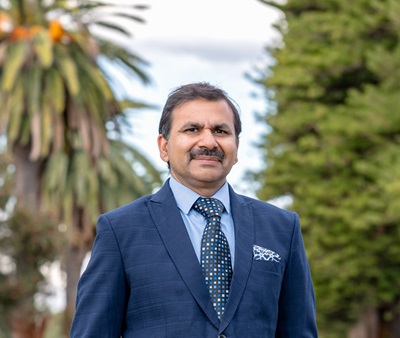
Associate Professor Parshotam Gera, FRACS didn’t initially plan to be a paediatric surgeon. He started his surgical career in General Surgery in India but found himself drawn to the unique challenge of caring for children. It would change his career path.
That turning point came in 1995, when a four-month-old baby arrived in emergency with bilious vomiting. No local paediatric surgeons were available, and the general surgeons were unsure what was wrong. They called a visiting specialist from a nearby hospital, who came straight away. The surgeon took the baby for a contrast study and confirmed malrotation with volvulus.
Associate Professor Gera assisted in the operation. “It was my first neonatal laparotomy. I was amazed by the tiny intestines and the surgeon’s precision. The baby recovered fully. From that day, I knew I wanted to be a paediatric surgeon.”
That goal shaped the years that followed. After completing his MBBS and initial paediatric surgery experience in India, he continued his training in Australia. He completed a Master of Medical Science at the University of Western Australia and a Master of Hospital Management at the University of New South Wales, before attaining his FRACS in paediatric surgery.
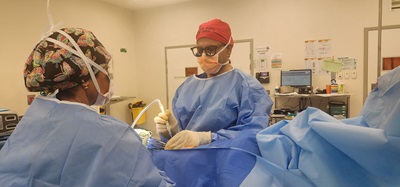
Today he works as a consultant paediatric surgeon at Perth Children’s Hospital and serves as the Acting Director of Trauma. Teaching forms a central part of his work. As a Clinical Associate Professor at Curtin University, and a Senior Instructor for RACS trauma courses, he mentors the next generation of surgeons. Associate Professor Gera maintains an active research profile with publications in national and international peer-reviewed journals alongside a busy clinical workload.
“We should lead by example,” he says. “I tell Trainees great paediatric surgeons must have good communication skills, empathy for the families and the child, and real passion.”
He has never doubted his own path. “This is the most rewarding branch. If I went back 20 years, I would do the same thing again.”
This focus on mentorship fits the specialty’s close-knit nature. “The conditions we treat are complex and rare, so our workforce is small. We work like a family—always connected, always ready to support each other,” he says. “If I ever need assistance, I can just pick up the phone and speak to any paediatric surgeon.”
He acknowledges the limited number of jobs but says the field manages it carefully. “We train only as many people as can get sufficient clinical exposure.”
Associate Professor Gera’s commitment reaches beyond the hospital. He continues the pro bono work his late father began in their home village in Punjab, India. “In my village, a disadvantaged population lacks access to basic health services and the knowledge to use them,” he says.
“People might have some healthcare access, but they don't know how to use it properly or can't afford medicine.” He sees widespread public health issues, with conditions like diabetes, hypertension, cataracts, and cancer returning each year.
To help, he runs health camps for the community. “The blessings from those people, the happiness on their faces … it's priceless.” He is now contributing towards building a holistic wellness centre in the village where residents can meditate, practise yoga, and learn healthy living.
That same concern about access—particularly in underserved communities—also shapes how he thinks about the future of surgery.
Associate Professor Gera looks ahead to how technology can change paediatric surgery in Australia. He believes artificial intelligence (AI) will help treat common conditions in rural areas while complex surgeries centralise in major hubs. “AI could help remote areas where specialists are scarce.
“But more than that, combining all centres’ experience to create uniform best practices is where the future lies. It can improve telehealth, aid diagnosis, and help with long-term patient follow-up.” He imagines Trainees using AI to practise procedures virtually before operating on patients.
Still, he sets one firm rule. “AI needs to be used by physicians or surgeons only.”
For Associate Professor Gera, the heart of the work hasn’t changed. “What really drew me to paediatric surgery was working with such delicate newborn tissue and seeing how quickly children heal. The chance to make that kind of difference truly appealed to me.”
Outside the hospital, he finds balance in simple things. “I love watching sports, going for long walks in nature, and spending time at the beach. I'm also a Bollywood movie buff—I watch plenty of movies on Netflix.”