2026 | Volume 27 | Issue 1
Author: Dr Peter F Burke FRCS FRACS DHMSA
Specialty Editor-Surgical History: ANZ Journal of Surgery
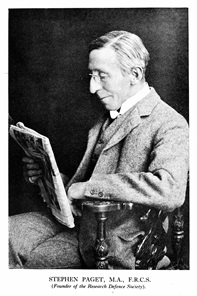
Stephen Paget MA FRCS , son of Sir James Paget, was 53 years of age when he wrote his 1908 Confessio Medici declaring, “I only want to confess what I have learned, so far as I have come, from my life, so far as it has gone.”
Published anonymously, these essays shadow a medical student through their career, until, as the final chapter is titled, The Very End and a verbatim selection follows.
‘It is said there is a difference between profession and vocation; that a doctor has a profession, and the priest has a vocation. Let us be agreed, that a vocation is a call, or a calling. But here is a new difficulty. For it is one thing to have a call, and another, to have a calling; and a man may have either or both. In medicine, many of us are glad that we have a calling, but doubtful whether we had a call.
‘Every year, young men enter the medical profession who neither are born doctors, nor have any great love of science, nor are helped by name or influence. Surely a diploma, obtained by hard examination and hard cash, and signed and sealed by earthly examiners, cannot be a summons from heaven. But it may be. For, if a doctor’s life may not be a divine vocation, then no life is a vocation, and nothing is divine.
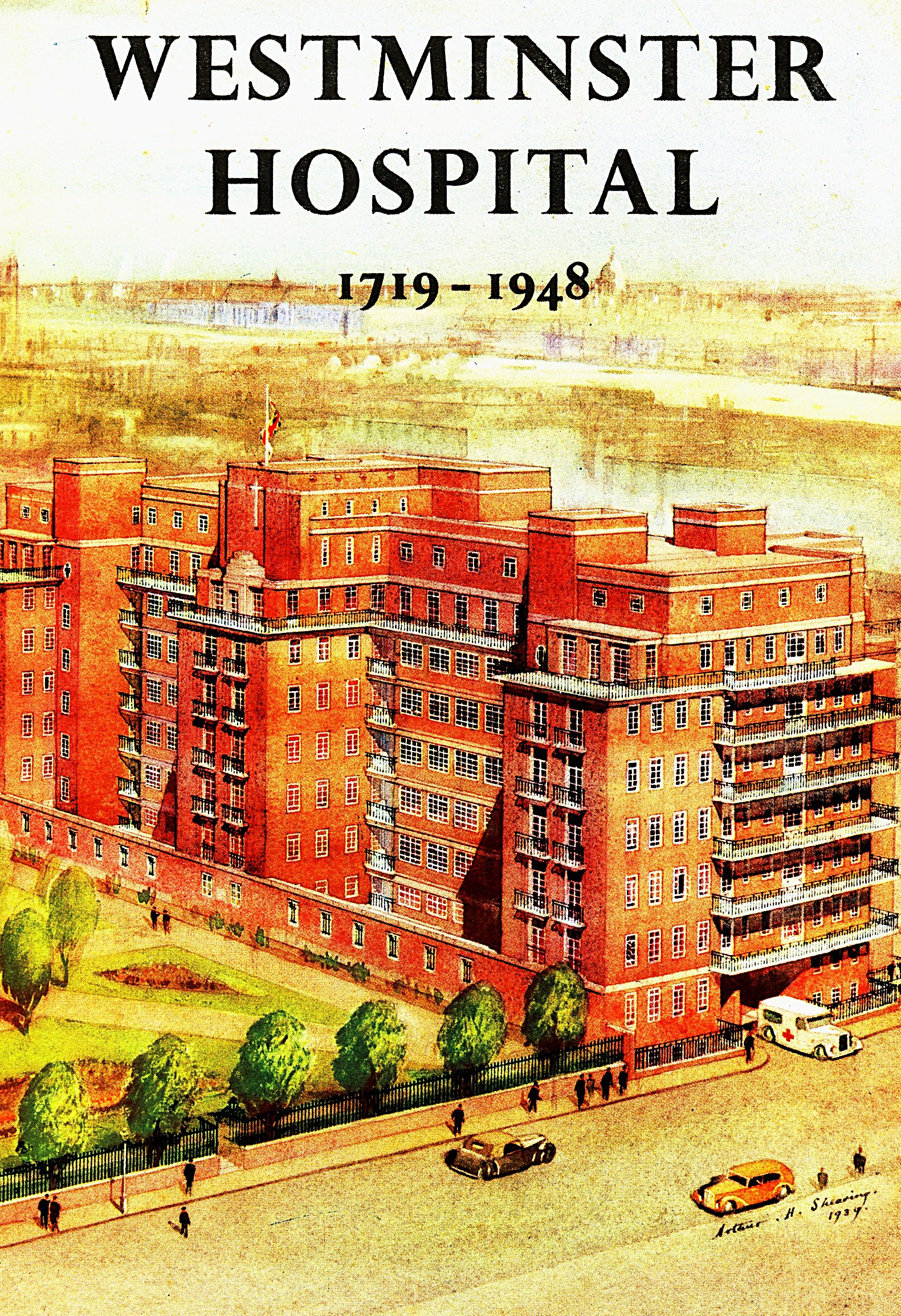
A Hospital of the time
‘Great hospitals with their schools are something more than blocks of buildings where patients are doctored, and students and nurses are taught. I do believe in the ‘spirit of a place’: to me, the genius loci, is really there.‘The hospital takes us for what we are, not for where we were. Inside its walls, we are all equal. This plunge into the actual flood of lives is a fine experience. The student now begins to learn lives. He need not go, like other young men, for that lesson, to the slums; for they come to him.
‘Here are the very people of the streets, whom he passes every day, here they are coming to him for help, telling him all about it, how it happened, what it feels like, why they did it: looking to him, right away, for advice and physic.
‘In the wards, where quiet and order reign, he has further opportunities for insight, and for more deliberate observation. There is not one profession that we need envy: for there is none that gives to its students such a good introduction to things as they are.
‘To make a beginning let it be granted, that our reward is paid to us part in money and part in kind. If medicine is a trade, why should the doctor so often work for nothing? If it is an art, what works of art does he produce?
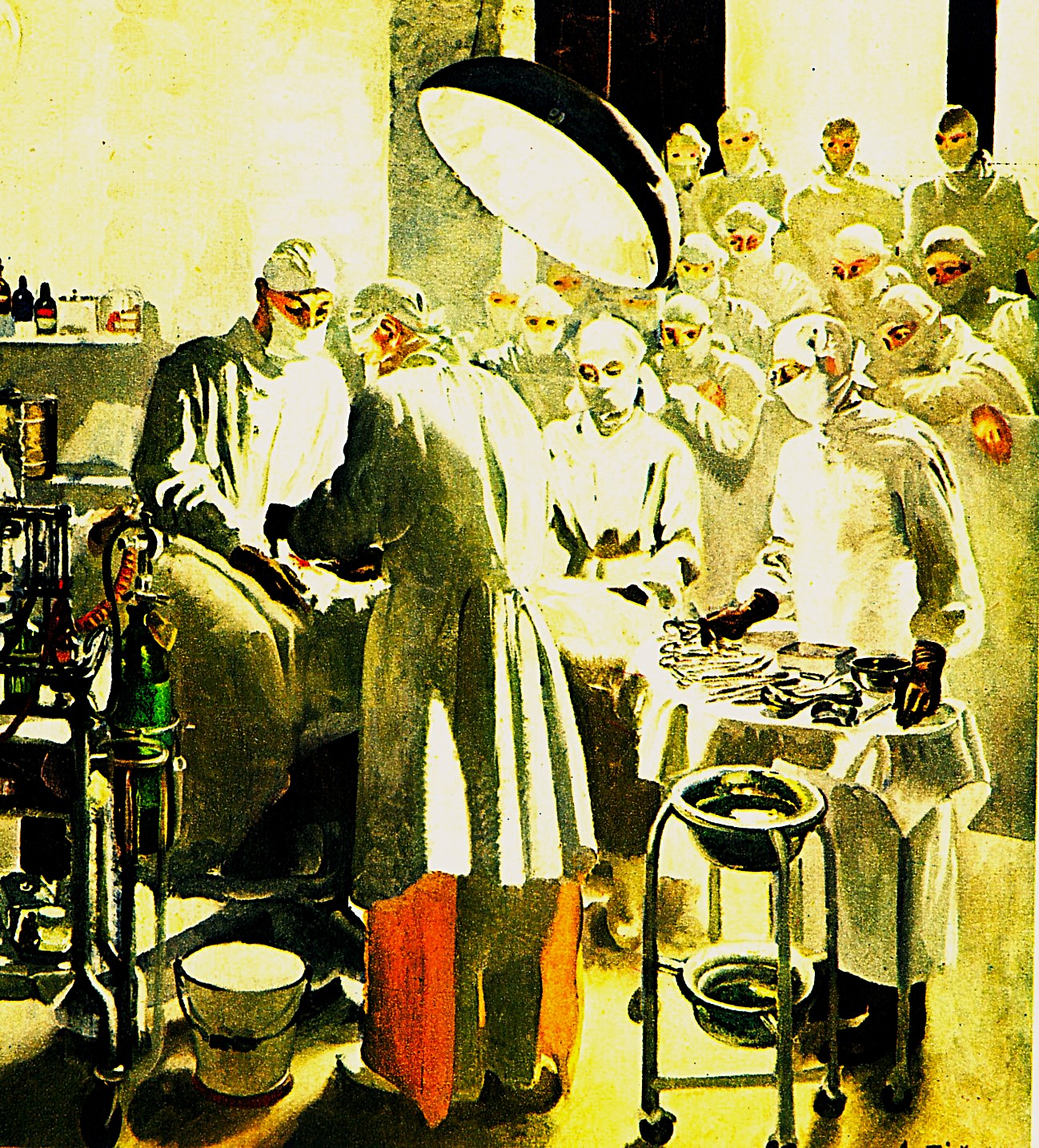
Students observing surgical procedure
‘The doctor, so far from creating nothing, creates life: for he who saves or prolongs life, creates more life. So long as we do our work well, nobody cares what we believe, what we look like, or how we vote. Wherever we go, we are taken for granted.
‘All of us, while we are students, wonder what we shall make of practice: but some of us forget to wonder what practice will make of us, and how we shall stand its discipline. Our successful cases, we feel, might belong to anybody: but our unsuccessful cases belong to us.
‘Beside that discipline of practice which we impose on ourselves, and that which our patients and the public impose on us, there is the inner discipline of the brotherhood, the scourge of competition.
‘It is no wonder, that some students dread starting in practice, and cling too long to resident or travelling appointments. The fact remains, that practice is the breaking of dreams. Inside the precincts of the hospital, we were safe and at home; she mothered us, sheltered us, made room for us all, and there was no fighting, more than a friendly contest for a prize or a House appointment.
‘You cannot be a perfect doctor, till you have been a patient: you cannot be a perfect surgeon, till you have enjoyed in your own person some surgical experience. Enjoyed, I say, and stick to the word.
‘To be ill, or to undergo an operation, is to be initiated into the mystery of nursing, and to learn the comforts and discomforts of an invalid’s life. So it may be with a man when he is ill. The silent, empty hours, the lull in the traffic of his life, the shutters up in the shop-front of his work, have something to say to him: they explain nothing, but they give him a point of view. They emphasise his individuality.
‘Pray to the Gods also, for a fair measure of the love of science, a good memory, a quiet manner, the accurate use of your hands and your senses, and the necessity of making money: above all, for that one gift which has been the making of the best men in our profession, the grace of simplicity of purpose.
‘The act or event of retirement is the same for all of us: but the attendant circumstances are particular to each of us. Some men are born to retirement, some achieve it and some have it thrust upon them.
‘Of them who achieve retirement, it is true that we may all do that by achieving old age: we have but to stay here till practice retires from us. Every doctor, sooner or later, must lay his practice in her grave. He who has not loved her, will soon see her buried and will hardly be sorry. By and by, he began to find contentment in odd nooks and corners of life, which from want of time he had left unexplored.
‘Of course, he had his bad times of dullness and loneliness. Especially, at those hours of the day which were most unkind, he must sit and hear the devil saying, nobody wants you now. That was horrible, the sense that he was inventing engagements, protracting occupations, playing at work; that his colleagues had put him on the Board of the Hospital to give him something to do.
‘It is the plain duty of us doctors who are Life’s paying guests, to be thankful for what we have received. We come to the question whether we need be thankful that we are so useful. It is not easy, because all of us are useful, and the supply of us exceeds the demand.
‘But what of that? A man’s use is what it is, though his work, if he should leave it would in a few days be in hands no less able. The work is the man: it is not the work that counts, but the man at work.
‘They who have had losses are good company, and I am glad to be of their fellowship. A man would like to possess this, that, and the other but they who do without these luxuries may be as happy as they who have them. He would like to save the lives of Dukes; but the tissues of humbler folk are just as interesting. He would like to be immensely proud of his own performances, all of them; but who is, except a thrice- distilled fool?’
From Harrods to Hackney: A Surgical Miscellany
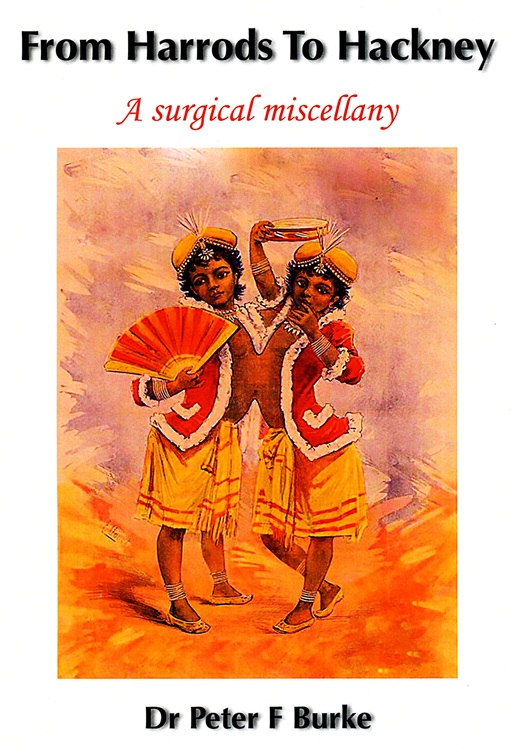
Surgeon and medical historian, Peter Burke has published his first book, ‘From Harrods to Hackney, A Surgical Miscellany.’
Almost 50 chapters of Peter’s writings over many years, reflect his medical-historical interests.
Dating from 1977 to the present, the entries encompass autobiographical themes, biographies of eminent medical persons, and even travelogues.
Published in a limited first edition, copies are available from the author.
The all-inclusive price including postage and packing is A$75.
All queries to: [email protected] or, PO Box 146, Newborough, VIC 3825