2026 | Volume 27 | Issue 1
In the fast-paced world of surgery, technical excellence is only part of the story. Behind every confident incision and life-saving intervention lies a network of dedicated educators who shape the next generation of surgeons.
In 2025, the RACS Skills Training team honoured more than 140 faculty members who have instructed on 25 or more skills training courses. These courses—surgical skills training (ASSET), trauma management (ATLS), critical care management (CCrISP), literature and research (CLEAR), and professional skills (TIPS)—are the backbone of surgical education. Their success depends on the voluntary contributions of faculty who give their time and expertise pro bono.
These courses could not run without our instructors—their commitment embodies RACS’ values of service, integrity, respect, compassion and collaboration.
Among this extraordinary community stand five instructors, each with more than 130 courses to their name. Their reflections offer a powerful insight into why the role of skills instructor is not only essential but also deeply fulfilling.
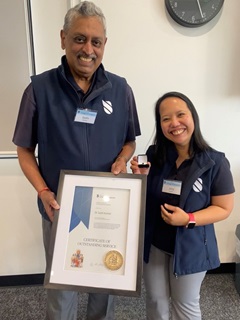
Dr Sashi Kumar with Dr J Carpio
Dr Sashi Kumar — A legacy of humility and growth
With 255 courses to his name, Dr Sashi Kumar believes that excellence in surgery begins with openness—a willingness “to listen, learn and adapt to new knowledge and skills” as they evolve.
For Dr Kumar, his reward of teaching comes not from accolades, but in connection. He describes his “immense satisfaction” as sharing his experience with “eager and enthusiastic” Trainees and contributing to their development.
His message to future surgeons is simple and enduring: remain receptive and committed to lifelong learning. Surgical skill, he says, is a moving target, and teaching ensures he continues to evolve alongside those he mentors.

Professor Ian Civil FRACS — Teaching the human side of surgery
Recipient of the 2025 Educator of Merit / Facilitator / Instructor of the Year award, Professor Ian Civil has devoted his teaching career—171 courses—to an aspect beyond anatomy: humanity. He believes that surgeons must “recognise the human element of being a surgeon”.
For Professor Civil, the most meaningful aspect of teaching is witnessing transformation—seeing Trainees develop into confident colleagues. He says surgical training is fundamentally relational and cautions that when institutions lose their personal touch, the profession risks losing future educators.
“Every aspect of a surgeon’s training and working life depends on functional relationships with real people.”
His decades of service stand as a testament to the importance of connection in surgical training.
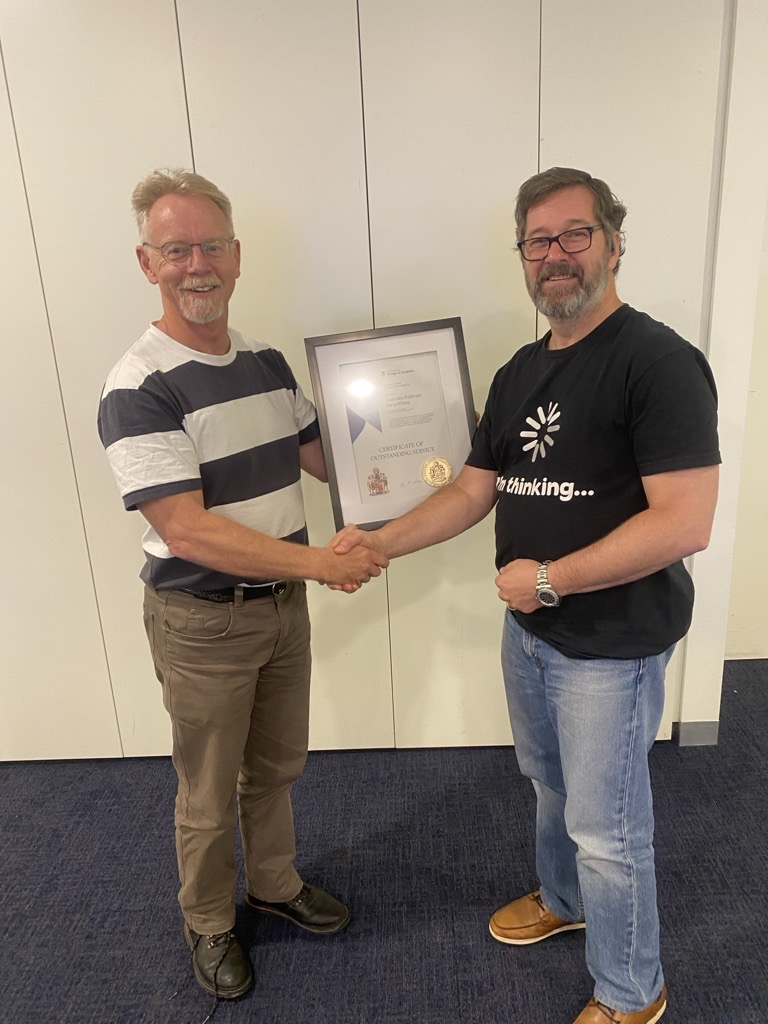
Associate Professor Garry Wilkes — communication, curiosity and joy
Associate Professor Garry Wilkes—with 152 courses to his credit—has witnessed and contributed to the evolution of surgical training. Over time, he has come to view communication as the foundation of effective surgical practice.
Associate Professor Wilkes teaches through role-modelling, critical engagement with evidence and an enduring sense of curiosity—encouraging learners to adopt the same approach. For him, “teaching and mentoring are two-way interactions”, with the greatest reward being when former Trainees return as faculty, “amplifying the benefits for future generations”.
His influence is evident in the shift toward interactive, scenario-based courses that empower participants to speak openly and challenge assumptions.
Dr Wai-Ting Choi FRACS — Champion of critical thinking and community
Dr Wai-Ting Choi believes that surgical excellence begins with critical evaluation. He emphasises the importance of recognising “normal from abnormal—even basic skills benefit from recognising a good cut or stitch from a bad one”.
To date he has conducted 147 surgical skills courses.
Central to his teaching philosophy is the communal nature of surgical training. He says, “it takes a community to train a surgeon”, and his greatest reward has been watching learners grow into safe, competent clinicians.
As skills training becomes increasingly structured and evidence based, Dr Choi underscores the importance of non-technical skills—including collaboration, communication and sound judgement—as essential components of modern surgical practice.

Dr John Fisher (left) and Dr Wai-Ting Choi (left)
Dr John Fisher FRACS — Passing wisdom across generations
For Dr John Fisher, the defining principle of surgical education is lifelong learning. He believes surgeons must develop a “forever need to acquire skills and knowledge and avoid complacency.”
As an instructor of 136 courses, his pride spans generations. Watching Trainees progress into senior roles—including the children of surgeons he once taught—has been a source of profound professional satisfaction. At the same time, Dr Fisher offers a note of caution.
As robotics, artificial intelligence and minimally invasive techniques continue to advance, he stresses the importance of preserving traditional surgical skills while embracing innovation.