2026 | Volume 27 | Issue 1
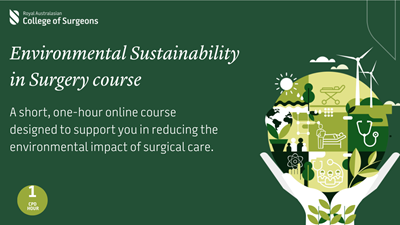
The Royal Australasian College of Surgeons (RACS) has launched a new online learning opportunity designed to support surgeons and Trainees in reducing the environmental impact of surgical care. The RACS CPD module on environmental sustainability in surgery and reducing low-value care is now live on the College eLearning platform and open to Fellows, SET Trainees, SIMGs, JDocs and PGY3+ doctors. Those who complete the course will obtain 1 CPD hour.
Environmental Sustainability in Surgery is a three-part, self paced module exploring the links between healthcare, carbon emissions and clinical decision-making. As healthcare continues to contribute significantly to global emissions, this course equips those with practical strategies to improve the environmental sustainability of surgical care without compromising patient outcomes.
Module 1 examines the relationship between surgery, global emissions and climate change, outlining the growing evidence behind environmentally sustainable healthcare.
Module 2 includes video interviews with surgeons and Trainees who are actively implementing sustainable practices, offering real-world examples of change in action.
Module 3 focuses on reducing low-value care and invites participants to contribute to a research project in collaboration with the University of Sydney into clinicians’ knowledge, attitudes and behaviour regarding low value practices and their carbon footprint.
Developed by members of the RACS Environmental Sustainability in Surgical Practice Working Party (ESSPWP) in collaboration with researchers from The University of Sydney, the course includes an educational video created by the Sydney Health Literacy Lab. Participants complete a short pre and post learning quiz to meet CPD requirements.
Dr Ben Dunne, Chair of ESSWP says, “Environmental sustainability and high-quality surgical care are not competing priorities. Designed specifically for busy surgeons, this course focuses on practical, clinically relevant steps to reduce the environmental impact of everyday surgical care, improve patient outcomes, and support surgeons in meeting their College CPD requirements.”
By the end of the program, learners will understand the relationship between climate change and health, recognise surgery’s contribution to emissions, and identify practical strategies—both individual and organisational—to reduce the carbon footprint of surgical care.
The course is available online now, and all Fellows, SET Trainees, and SIMGs are encouraged to explore how small changes in practice can drive meaningful environmental improvement.
Register for the course here