2026 | Volume 27 | Issue 1

There are two missions the leadership of RACS is currently focused on: amplifying member value and improving the experience of surgical training across Australia and Aotearoa New Zealand. These priorities come from listening, observing, and working alongside our membership every day.
Surgical training is an incredibly challenging time of life. Many Trainees juggle heavy clinical demands with personal commitments, relocation pressures, and the very real stress of building a career in a complex health system. I, myself, have been involved in research exploring burnout in Otolaryngology Head and Neck Surgery training and remove some of the unnecessary stressors along the pathway to Fellowship. We know these pressures aren’t unique to one specialty. They are common themes across all nine surgical specialties, and they matter profoundly for wellbeing and retention.
Recent Trainee feedback, both from our own research conducted in Q4 last year and from external sources, further highlights where support is needed most. Results from the 2025 Torohia medical training survey in Aotearoa New Zealand, for example, shows several strengths, including excellent training and clinical supervision, and support to find opportunities for skill development, but also clear areas that need sustained attention, including consistent workplace orientation and more secure employment options post-training. The findings also underline concerns around experiences of bullying, harassment or discrimination. The feedback is consistent with what our Australian Trainees tell us and highlights the areas that demand action so that training environments are safe, equitable and respectful.
So, what is RACS doing about this?
In addition to being more explicit about the unique and critical role RACS plays in surgical training, and more transparent about our training fees, we are reducing the financial burden on Trainees, holding the RACS component of SET fees flat in 2025 and reducing them by 5 per cent in 2026. We’re also reducing the cost of essential skills courses. And in Aotearoa New Zealand, we’ve put in place an agreement so eligible clinical Trainees who don’t opt out have their fees paid directly to RACS by Te Whatu Ora – Health NZ easing upfront costs and cash-flow stress.
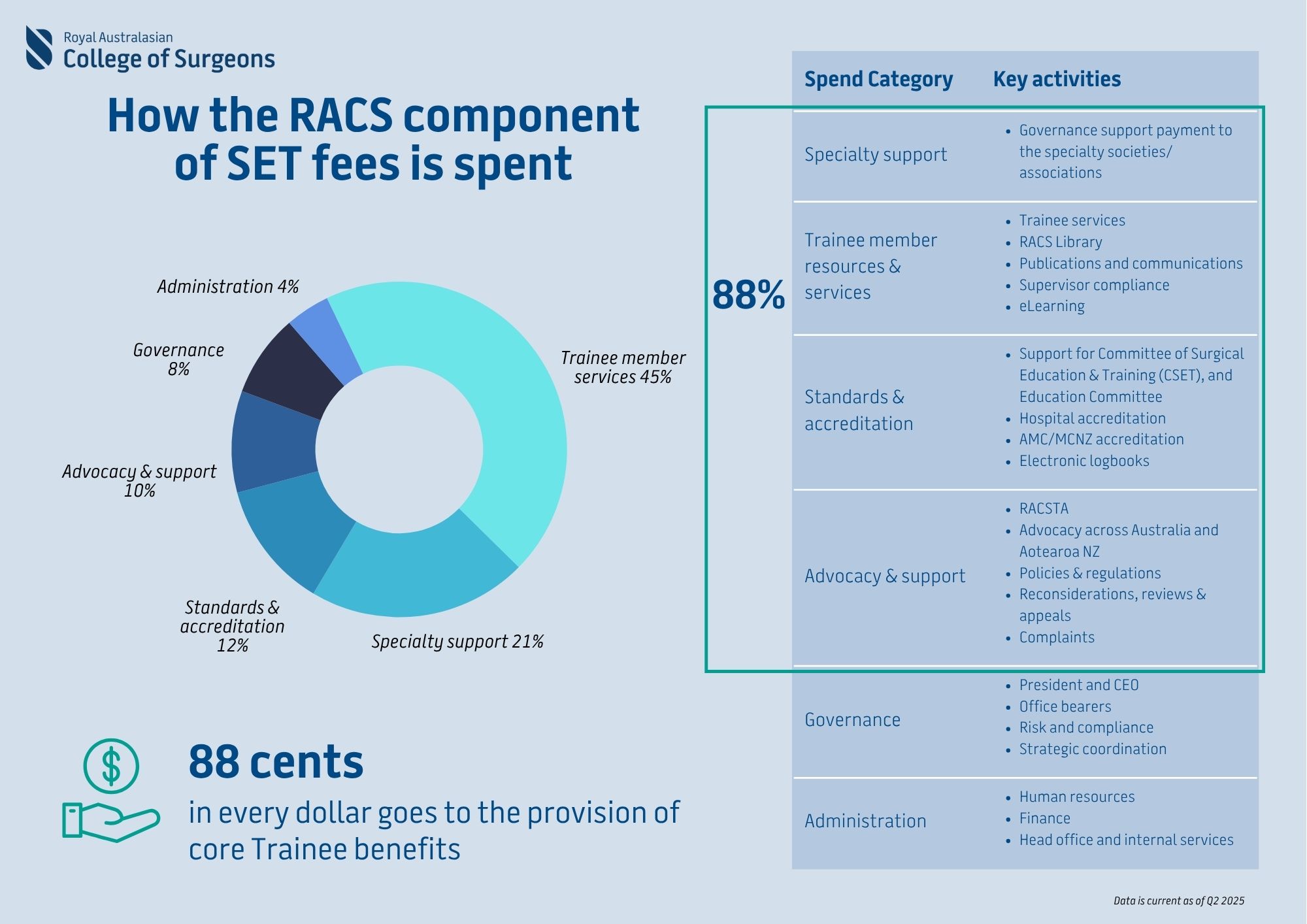
These are tangible steps that Trainees are telling us are already making a difference.
Through the Surgical Pathways Strategy, we are continuing to modernise the training environment to deliver further cost savings, as well as specialty leadership. We’ll be sharing more information on the strategy soon, especially as we enter the co-design phase in Q2 where collaboration with specialty societies will shape the work, ensuring the result is relevant, trusted and effective.
We know there’s more to do, from improving workplace conditions and Trainee support systems, to reducing barriers into and along the surgical training pathway. But we’re already seeing early signs that these changes are being felt on the ground, and we’re committed to maintaining momentum.
Thank you to every Trainee who has shared their voice, and to every supervisor, mentor and Fellow who continues to support the next generation of surgeons. Improving the training experience, and delivering real member value, isn’t a project with an end date. It’s our ongoing purpose, and one we pursue together.
Warm regards,
Professor Ray Sacks
Vice President