2026 | Volume 27 | Issue 2
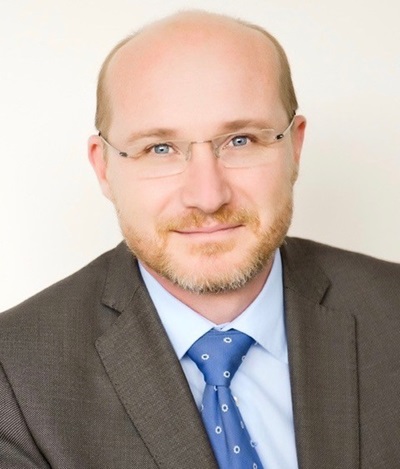
Dr Chris Adams
Surgical advocacy is no longer happening on the margins of health policy.
Across Australia and Aotearoa New Zealand, the Royal Australasian College of Surgeons (RACS) has built a more visible and coordinated presence, ensuring surgeons are part of the conversations that shape care, workforce and access.
In Aotearoa New Zealand, that work is led through the Aotearoa New Zealand National Committee, which consists of 12 elected members, along with representatives from all nine specialities.
It brings together a single, collective voice for surgeons and connects that voice directly to RACS Council in Australia, reinforcing the College’s binational structure.
For Wellington plastic surgeon Dr Chris Adams, who sits on the committee, that structure is critical.
“There is a clear pathway for issues here to be heard at Council level, and that has made a real difference,” he says.
From representation to influence
The National Committee’s role is both outward and upward.
It engages directly with government, health providers and sector stakeholders on key surgical issues in Aotearoa New Zealand, while also reporting into RACS Council, ensuring local realities are reflected in broader decision making.
That connection has strengthened over recent years.
Dr Adams says there was a time when some surgeons questioned whether the College fully understood the Aotearoa New Zealand context, or whether its focus leaned too heavily towards Australia.
“That perception has shifted,” he says.
“The advocacy work has helped re-establish that this is a genuinely binational organisation, and that Aotearoa New Zealand has a seat at the table.”
That seat is not symbolic.
It allows the National Committee to bring forward issues around workforce, training, access and equity, and to ensure they are considered alongside Australian priorities.
A collective voice across specialties
One of the strengths of the National Committee is its breadth.
It represents all nine surgical specialties, as well as wider perspectives across the profession, allowing it to identify shared challenges rather than competing priorities.
Dr Adams says that collective approach has been central to strengthening advocacy.
“As surgeons, we have more in common than we have differences,” he says.
“When we speak with a single voice about the provision of surgical care, it carries more weight.”
That includes supporting individual specialty societies in their own advocacy efforts, while amplifying those concerns at a national level.
It also creates a forum where surgeons can better understand system-wide issues, from workforce shortages to inequities in access to care.
Advocacy grounded in real need
At its most effective, advocacy is tied directly to what surgeons see in their day-to-day work.
That includes identifying gaps in services, highlighting pressure points in the system, and ensuring decision makers understand the practical impact on patients.
Dr Adams points to workforce as one of the clearest examples.
Aotearoa New Zealand trains highly skilled surgeons, but without clear pathways into employment, there is a risk those Trainees leave for opportunities elsewhere.
“Advocacy has helped bring that issue into focus,” he says.
“It is not just about training numbers; it is about how we transition people into the workforce and retain them in the system.”
Building relationships that deliver outcomes
Advocacy can be slow and, at times, frustrating.
Progress often depends on building relationships, maintaining consistent messaging, and staying engaged even as political and organisational priorities change.
Dr Adams says one of the key gains in recent years has been a more active and strategic approach.
“The College is more present,” he says.
“There is a willingness to engage, to seek out opportunities to influence, and to have those conversations across government and the sector.”
Looking ahead
The priorities for advocacy remain clear.
Workforce development, including better alignment between training and employment, continues to be a central focus.
So too does supporting international medical graduates, who play an important role in strengthening surgical services across the country.
Capacity is another pressing issue, with growing demand across both public and private sectors requiring coordinated solutions.
For Dr Adams, the role of advocacy is to ensure those issues are not only raised but understood.
“Surgeons are the ones who see where the system is working and where it is not,” he says.
“Advocacy is about making sure that knowledge is heard and acted on.”
Across both countries, that is where RACS is increasingly making its impact felt.
Not on the margins, but at the table where decisions are made.