2026 | Volume 27 | Issue 2
Author: Dr. Anip Joshi MBBS MS FACS FIAGES (Hon.), Chief Consultant Surgeon and Associate Professor of Surgery, Bir Hospital, National Academy of Medical Sciences, Nepal. Head of Surgery Department and Acting Chair, Institutional Review Board.
I was a visiting surgeon from Nepal at Mater Brisbane in mid-2025 as the Royal Australasian College of Surgeons (RACS) Katherine Edyvane scholar. The purpose was to learn about breast cancer service at Mater to start a dedicated breast surgery service in Bir Hospital in Kathmandu.
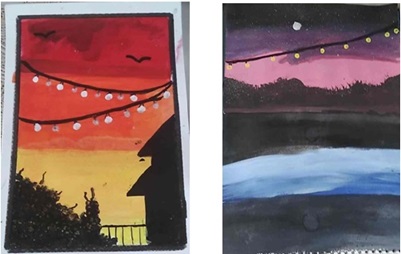
Paintings by Abhigya from Kathmandu
I come from a land of Himalayas, grew up in a old newar city near UNESCO world heritage royal palace courtyard (Patan Durbar square) and believe in strong family values. The two paintings, of an evening sunset and moonlight were shared by my nine and half year old daughter Abhigya from Kathmandu while I was in Brisbane. I missed her and my three and half year old son Abhideep a lot while I stayed in Brisbane. But I still feel that the Mater experience was worth it and this story is all about the trade off between a surgeon’s aspirations and raising young family.
Opportunity by RACS and Mater
Thanks to RACS’ Katherine Edyvane scholarship, I could learn about patient-centric approach, clinical prioritisation of breast patients, usefulness of different modalities of investigations ( PET-CT, contrast mammogram, breast MRI, bone scan etc.), and treatment planning in breast surgery. I also learned about preoperative preparation of breast patients, planning surgery as well as post-operative care and follow up surveillance.
In the operation theatres, I learned about breast conserving techniques, sentinel lymph node biopsy, nipple sparing mastectomy, skin sparing mastectomy, approach with the use of hook wire localisation, use of gamma probes, intraoperative use of X rays and many new techniques of oncoplasty and breast reconstruction.
The Breast cancer Multidisciplinary team (MDT) meetings provided me a unique opportunity to learn about shared decision making, newer imaging modalities, histopathology and recent advancements in breast genetics. The oncoplastic MDT provided the opportunity to learn about planning and scheduling for oncoplastic surgery. The Breast Cancer Survivorship MDT (image 5) provided a novel experience of post treatment supportive care, which will add value to the clinical care for breast cancer patients in Nepal. In addition, meetings with radiologists, genetics team, medical oncologist, radiation oncologist, breast care nurses and education team provided whole new areas of learning, which was an invaluable learning experience.

l to r: Prof Christopher Pyke and Dr Anip Joshi
From my stay at Mater Hospital, I have made many friends who supported wholeheartedly in my initiative. I have received enormous support and guidance from my supervisor Professor Christopher Pyke (image 3 and 4) who has been a mentor, guide and friend in my quest to improve the quality of breast service at Bir Hospital. Thank you to the consultant surgeons in the Breast Unit—Dr Chris Allan, Dr Jason Lambley, Dr Sally Meade, Dr Jennie Gu, and Drs Jeoff Muduia in General Surgery and Dr Anna Loch-Wilkinson in Plastic Surgery.
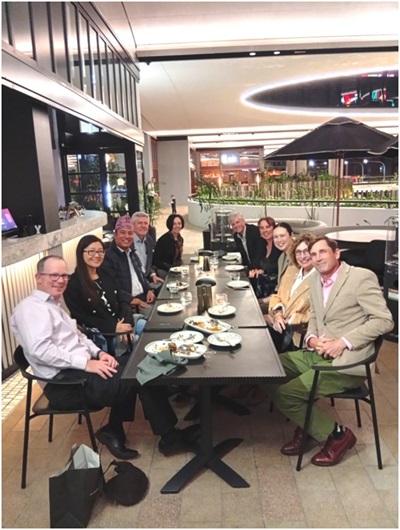
Dinner hosted by Mater Breast Surgery team
RACS scholarship’s positive impact in Nepal
Following my return to Bir Hospital after the completion of my training, we have started Breast Multidisciplinary Team (MDT) meetings. These monthly meetings are attended by surgeons, pathologists, medical oncologists, radiation oncologists, radiologists. We plan to start breast reconstruction surgery and oncoplastics service in collaboration with Plastics team.
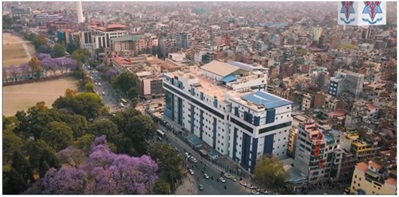
Bir Hospital, National Academy of Medical Sciences campus, Kathmandu
At the International Conference of the Society of Surgeons of Nepal held in November 2025, I led and organised a panel discussion on Breast surgery in Nepal: Are we conserving enough? During the conference, I delivered a guest lecture on Breast cancer landscape - From genetics to vaccine and from surgery to survivorship and shared my Mater learning with fellow surgeons in Nepal. I also delivered a grand round lecture in January 2026 at Bir Hospital on Breast cancer surgery in Bir hospital to the hospital leadership and multidisciplinary audience highlighting where we aim to reach in breast service.
Open call
I dedicate any success in this undertaking to RACS Katherine Edyvane scholarship, the Mater Hospital family, and to the patients and from the patients from whom I learned so much.
For this undertaking, there is a need for local team building as well as robust international support. I would like to pledge an open call for all who would like to collaborate and partner for this shared initiative of improving breast cancer care in Nepal.
About the author
Dr Anip Joshi MBBS MS FACS FIAGES (Hon.) is the Chief Consultant Surgeon and Associate Professor of Surgery in Bir Hospital, National Academy of Medical Sciences in Nepal. He is the Head of Surgery Department and the acting Chair of the Institutional Review Board.
Dr Joshi is a Faculty of Master of Surgery program of National Academy of Medical Sciences, and trains post graduate surgery residents. He is the Principal Investigator of Breast Cancer Outcome Research in Bir Hospital—a collaborative research initiative supported by international experts from Mater Hospital (Australia), WHO - International Agency for Research on Cancer (France) and Princess Margaret Cancer Centre (Cananda). He has also published the outcome of triple negative breast cancer in Bir Hospital guided by Professor Christopher Pyke from Mater Hospital, Queensland, Australia (https://espace.library.uq.edu.au/view/UQ:6cb00ae).