2026 | Volume 27 | Issue 2
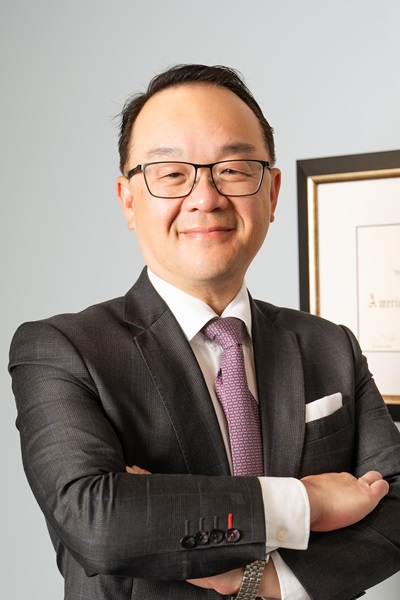
Prof Eugene Ek
For Professor Eugene Ek, receiving the Royal Australasian College of Surgeons (RACS) 2025 John Mitchell Crouch Fellowship is both “a recognition and a responsibility."
RACS’ most prestigious scholarship, the John Mitchell Crouch Fellowship, supports a Fellow who is making an outstanding contribution to the advancement of surgery or to fundamental scientific research in the field.
"It's probably one of the highest honours I could achieve in my academic surgical career," Professor Ek says. He recalls that during his training, one of his mentors was just the third orthopaedic surgeon to have received the award. And since, there has only been six orthopaedic surgeons in 47 years to be honoured with this prestigious award.
"For me to be part of that esteemed company is a real honour. It gives me encouragement to continue the research I've been doing."
An orthopaedic surgeon specialising in upper extremity reconstructive surgery, Professor Ek focuses on the shoulder, elbow, wrist and hand. His work sits at the intersection of surgery and research, with a long-term goal—improving how doctors treat joint pain and arthritis.
His current project tackles a question that has puzzled surgeons for years: why do some people with severe arthritis feel very little pain, while others with only joint damage suffer significantly? His research aims to uncover answers by mapping the minute and intricate nerve pathways inside and around human joints.
This line of inquiry is a natural, though innovative, evolution of his work. As co-director of the Hand and Wrist Biomechanics Laboratory at the O'Brien Institute, Professor Ek has already built a strong track record. He has led pioneering studies on fracture fixation and shoulder instability, developed new surgical techniques, and published extensively. The Fellowship-supported project now builds on this foundation and turns towards the source of the pain itself.
"We've always looked at the joint and the fluid, but we haven't really studied the nerve supply," he says. His team is working to map these nerve pathways in 3D. Early findings in the small joints of the hand suggest that worn-out areas develop a much denser network of nerves than healthier parts of the same joint.
The ultimate goal is ambitious: to develop new, less invasive surgeries that target only the pain. "We want to target the pain fibres. There are other nerves the joint needs for stability, so we want to preserve those. The patient can still have function and a stable joint, but without the pain."
This approach, called denervation, could become a joint-preserving alternative to the current standard of powerful painkillers or total joint replacement. "Joint replacement is a great option, but it's expensive, and in a younger person, there's always a risk of it wearing out. If we can delay that by giving them a smaller, durable procedure that manages their pain, the savings—for the patient and the health system—would be huge."
The project is collaborative and he works closely with the University of Melbourne's Department of Anatomy, world leaders in nerve mapping. His clinical work is based at Monash Health.
"Being across different institutions hasn't stopped us. It's been very fruitful."
His drive to solve problems with his hands began in childhood. Born in Malaysia and raised in Melbourne from the age of two, Professor Ek was always a tinkerer. "As a child, I really enjoyed building LEGO, pulling apart computers and putting them back together."
At university, an inspiring mentor—who was an orthopaedic tumour surgeon—showed him how he could apply that same curiosity in medicine. "I saw what he was able to do technically. If I could do that to fix a problem within a person, I knew it was something I would enjoy for the rest of my career."
That passion is clear. He now splits his time between public surgery at Dandenong Hospital in Melbourne, his private practice at the Melbourne Orthopaedic Group, and his research. His training took him to leading centres in Switzerland, Boston, and New York—experiences that shaped how he approaches his career today.
"Seeing how the best institutions balance a high-level practice with family life gave me insight into how I want to shape my career in Australia."
His advice to young surgeons is simple: find great mentors, collect data steadily, and stick to a theme. "If you start from a concept, then do the basic science, the clinical research and the trials, you can answer the whole question from beginning to end. At the end of your career, you can look back and say you made a significant contribution to a field you cared about."
With the support of the Fellowship, Professor Ek is on track to do just that—turning a childhood love of building into a future where arthritis pain can be managed without major surgery.