2026 | Volume 27 | Issue 3
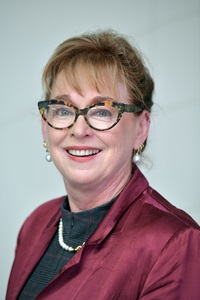
The global audience at the prestigious Imperial College London may have expected the trailblazing orthopaedic surgeon and academic Associate Professor Kerin Fielding to address gender issues in her Athena Swan keynote.
Instead, the Wagga Wagga-based surgeon challenged the audience with a topic few had seriously considered: how where people live can shape opportunity, access and inclusion just as profoundly as gender.
Her keynote, The Diversity of Where: Finding Your Place for Equity and Inclusion, argued rurality should be recognised as an element of diversity, a concept she says surprised many in the room.
“They really hadn’t thought about rurality as an element of diversity before,” Associate Professor Fielding says.
Representing RACS internationally
The keynote was delivered as part of a 20-day overseas study tour with her husband, Dr Joe McGirr, where she represented RACS at international meetings, conferences and discussions examining rural health access and specialist training models.
The trip included visits to Canada, England and Scotland, attendance at the World Physicians Conference in Quebec, meetings with parliamentarians and discussions with international surgical and medical leaders.
Associate Professor Fielding says one of the key aims was comparing Australia’s rural health challenges with countries facing similar geographic barriers.
“We wanted to see if there were pearls of wisdom or different models of training and healthcare delivery that could help improve access for rural communities.”
The invitation to speak at Imperial College London was itself a major honour. Athena Swan is internationally recognised for promoting diversity and inclusion in science, technology, engineering, mathematics and medicine, while Imperial College London holds a prestigious Gold Award status.
“They usually have globally recognised academics and scientists speaking at these events,” Associate Professor Fielding says. “It was an incredible honour.”
How rurality drives inequity
While her own career has involved breaking barriers as a woman in surgery, she says the international audience was particularly struck by the idea that rurality itself creates inequity.
“At RACS we have been talking about this through the Rural Health Equity Strategy for some time. A lot of the recommendations include ensuring rural representatives are on committees and boards so the rural voice is heard.”
Associate Professor Fielding says many people internationally still do not fully appreciate the impact geography has on healthcare access.
“People don’t always think about rural communities as essential. We make food for the country. Agriculture is a huge contributor to Australia’s economy, but maintaining services for rural communities is often overlooked.”
Comparing international systems
During the trip, Associate Professor Fielding explored healthcare systems in Canada, where she observed major shortages in maternity and specialist services, including orthopaedics, ENT and plastics, particularly in remote northern regions.
“Canada has some serious access problems. There are interesting niche models of care, but no coordinated national approach across specialties.”
She says the experience reinforced that Australia is leading internationally in several areas of rural health reform.
“The work RACS is doing through the Rural Health Equity Strategy and the collaboration across colleges is actually very advanced internationally. It gave me a lot of hope.”
Lessons from Viking doctors
Among the most interesting models she encountered were those used in Scotland’s remote island communities, including the Shetland Islands.
“They have incredible outreach models where specialists travel to very isolated islands in the North Sea,” she says. “They even have a yearly conference for what they call the Viking doctors.”
Associate Professor Fielding says she hopes to return to study the models more closely and better understand how healthcare workers sustain services in extremely remote environments.
“The key is understanding how they maintain workforce and access in those conditions.”
Challenges for rural Australia
Despite progress in Australia, she says rural perspectives remain underrepresented in many academic and policy settings.
“Even this morning, I was trying to find assessors for a rural health inequity thesis. The concern is that people reviewing it through a metropolitan lens may not truly understand the context.”
She says the issue can feel familiar to the historical barriers women faced entering surgery.
“In some ways, finding people who genuinely understand rurality can still be just as difficult.”
For Associate Professor Fielding, the message she delivered in London was simple: diversity is not only about gender or identity but also place.
And for many in the audience, it was a perspective they had never seriously considered before.