2026 | Volume 27 | Issue 3
Opus C
Author: Associate Professor Felix Behan, AM
Sleeping on a problem may be the best solution to any controversy.
I have picked the locks of reconstructive surgery using these principles of dermatomal alignments to ensure vascular, neurological and lymphatic integrity—simply relying on nature’s contribution in this Keystone concept.
My library of operative videos is available to anyone who wishes to enquire and thank heavens for email, which facilitates communication and teaching worldwide.
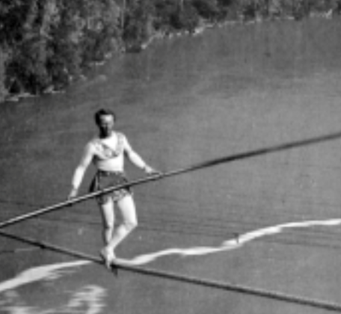
The melanoma reconstruction I recently used in Surgical News goes a little way to revealing its integral merits and it can be likened to walking on a tightrope for the uninitiated.
New ideas are always questioned by the ‘establishment’. We see this issue in politics all the time—challenging current thinking or ideology and alternative opinions come into the equation, always devoured by the press.
We have been brought up as plastic surgical Trainees to follow the edicts of our masters and this story of Sir Benjamin Rank is worth repeating. A patient with a three-year chronic ulcer of the lower limb was sent to Benny for Transport Accident Commission (TAC) review.
He questioned the use of a flap reconstruction, arguing that it broke one of his edicts because, “We do not do flaps on the lower limb”. The patient told me of the consultation and she summarised it well saying, “Who cares, it has finally healed after three years”.
Even Pyotr Thaikovsky’s first Piano Concerto was rejected by Nickolai Rubenstein saying it was rubbish and unplayable and rewrite it. But the composer let the world be the final arbiter. Now it is one of the most popular piano concertos ever written.
The Semmelweis experience and the use of Milton lime solution was also rejected by the establishment and the initiator was not reappointed at the hospital because of the controversy and had to go to Switzerland to get reemployment. But its long-term results saving lives led to its eventual acceptance. Even women preferred being confined in the street outside the hospital to avoid that mortality characteristic of the labour ward then.
At the Western Hospital I was given a free hand to operate, not dissimilar to Joseph Haydn’s experience in music in Vienna, becoming the master of the symphony and creating eventually 106. His clock symphony still rings in my ears because of its syncopation sounds.
This is now happening with the Keystone as mirrored in the emails I receive from around the world, including one from Ian Hayes quoting a surgeon from Yemen who stated the Keystone is a surgical solution to many of our clinical difficulties.
The late Professor Don Marshall even presented my work at a College meeting years ago during the embryonic phase of the Keystone development— I was not asked because it seemed too radical at the time—yet Don liked the concept and supported me.
Now on another tack, John Harrison the self-taught clock maker of the 1850s upset the establishment with his invention providing a solution to the swinging pendulum in sailing ships, still used 100 years later. But he was not part of the Guild and had to front the criticising committee to justify his invention.
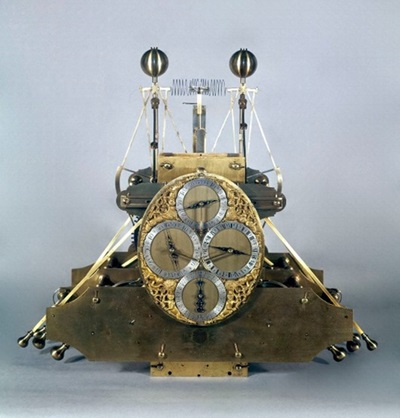
Harrison's Marine Chronometer
Professor Martin Ashdown, over an ale recently, could remind me that Captain James Cook on the Endeavour had one of Harrison’s clocks which may have had some contribution to his navigational superiority in the discovery of eastern Australia.
When I was working at St Georges Hospital in London, I had to do a cross-leg flap with its entrenched limitations of wound breakdown. I somewhat adventurously included the fascia of the gastrocnemius muscle complex of the calf to secure the suture repair and provide stability. It became the solution for questionable results in cross-leg flaps leading me to the Keystone concept. Fortunately, my case healed, thus reinforcing my thinking that flaps needed a fascial base.
And Harold Gillie’s purloined some of the ideas from Ombredanne. Even the French surgeon Hippolyte Morestin likewise rejected Gillies from any surgical intrusion because of his plagiaristic tendency. I even bought Ombredanne’s book in Paris and one must always get into print, as I have done with the Keystone.
Charles Darwin had similar rejections about his observational findings. He found it was possible to distinguish which Galapagos Island was the source of the hummingbird variations again to the annoyance of the establishment.

Hummingbird
On his return to London, Darwin found that Alfred Russel Wallace was about to publish a similar theory, prompting him to publish his own work on evolution expeditiously.
He knew his observations were accurate—all from nature—and nature always gets it right. His publication On the Origin of Species subsequently gave him authenticity.
Darwin had his troubles, as many have, with the establishment, and this cognitive dissonance is just a human trait.
So, in conclusion, Sir William Osler’s statement that observation is the basis of medical advancement as we experienced with penicillin. But Oliver Wendell Holmes succinctly rephrased it by saying: “A moment’s insight is more valuable than a lifetime of experience”—the Keystone experience in a nutshell (not a Petri dish as penicillin was).
The Keystone is now part of the reconstructive canon and I now shoot emails around the world, drawing Keystone solutions to problems from China to Yemen and Haiti to name a few.
The word Keystone has its origins in Moorish architecture, evident in the Roman arches and the wedge brick even stops the Arc de Triomphe from collapsing. All these multiple tricks are revisited in the Keystone concept publications.