2026 | Volume 27 | Issue 3
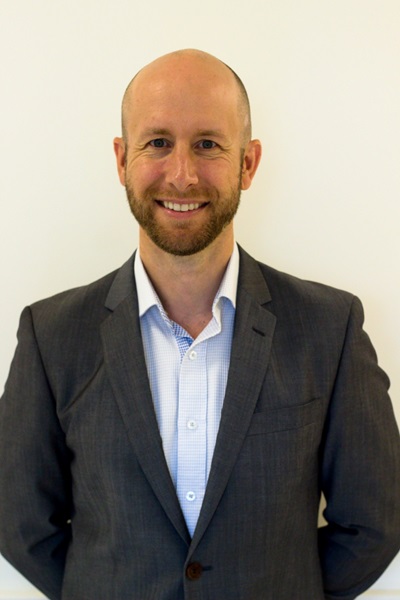
Dr Graeme van der Meer
Dr Graeme van der Meer did not set out to build a long-term career in Aotearoa New Zealand.
He arrived from South Africa for what was meant to be an 18-month Fellowship in Otolaryngology with a focus on advancing his subspecialty interest in paediatric ear, nose and throat surgery.
That plan changed. An early job offer, strong clinical support and opportunity has kept him in the system.
Today, through perseverance and taking opportunities as they arise, he serves as Chair of Training for Otolaryngology Head and Neck Surgery (OHNS), in Aotearoa New Zealand, helping shape future surgeons.
He first applied for special purpose registration and then, when he was sure he wanted to stay, he applied and worked under vocational registration. This led to him being tapped on the shoulder by the Training Committee to be a SET Supervisor of Training. To be eligible to supervise Trainees, he applied for FRACS and then joined the National Training Committee for OHNS.
Last year he was appointed as chair of this committee.
His journey highlights the realities of the International Medical Graduate (IMG) pathway, from entry to full vocational registration.
Navigating the IMG pathway
Dr van der Meer says the IMG pathway requires persistence, preparation and patience.
He first entered the system on a special purpose scope of practice, allowing him to work while assessing long-term options.
“That step is important,” he says. “It gives you exposure to the system before committing.”
It also gave him an opportunity to see what it was like working in a different country and different medical environment—and it also gave him an opportunity to prove his skills.
When he chose to stay, he began the formal process toward vocational registration through the Medical Council of New Zealand – Te Kaunihera Rata o Aotearoa and the Royal Australasian College of Surgeons - Te Whare Piki Ora o Māhutonga.
“It is a long process with multiple steps and checks,” he says. “You need to demonstrate equivalence across your entire training and practice.”
That meant compiling extensive documentation.
“Logbooks, registrar feedback, research, publications, undergraduate and postgraduate training records. It runs to thousands of pages.”
A key challenge lies in proving comparability between countries.
“What is considered important in one system may not align exactly with another,” Dr van der Meer says. “Even if the training is broadly equivalent, you still need to demonstrate that in detail.”
He says the process also requires formal English language verification.
“It can feel repetitive, especially if English is your first language. But it is about maintaining standards.”
The process took between 12 and 18 months and came at high financial cost.
What made it easier was the extensive support he received from the College offices in Wellington who helped make sure all the correct boxes were ticked.
While many may be put off by the bureaucracy and challenges, Dr van der Meer sees the value.
“Maintaining standards is important. It is not adversarial. The people involved want you to succeed while protecting the integrity of the system.”
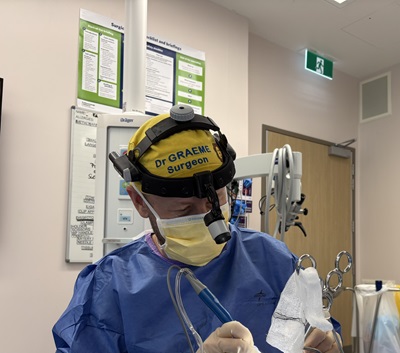
At work, committed to surgical care
Life beyond work
The move also reshaped life outside work.
Dr van der Meer relocated with his wife, and the couple has since raised two children in Aotearoa New Zealand.
Integration into the local community came naturally.
“Having children here helps. You meet people outside the hospital and build connections.”
Shaping future surgeons
As Chair of Training, Dr van der Meer now focuses on ensuring high-quality surgical education across Aotearoa New Zealand. His role spans accreditation of training posts, workforce planning and policy development, alongside advocacy for Trainees.
“We need to make sure Trainees receive strong supervision, good clinical exposure and the right support throughout their training.”
He also contributes to broader bi-national discussions as training structures evolve between Aotearoa New Zealand and Australia.
“There are differences in how medicine is practised, and it is important those are reflected in training frameworks.”
His own experience as an IMG informs his approach. “I understand the challenges of navigating the system,” he says. “That builds empathy for others coming through, particularly those from overseas.”
Advice for IMGs
For surgeons considering a move to Aotearoa New Zealand, Dr van der Meer recommends an exploratory visit first.
“See the system, meet people, and understand what the move means for you and your family.”
He recommends special purpose registration as an easier pathway for an entry point.
For IMGs with eligible medical degrees, this MCNZ pathway takes 20 business days from submission to work for a fixed term in Aotearoa New Zealand.
“It allows you to work in the system before committing to full vocational registration,” he says.
Demand for specialists remains strong, and support networks are available.
“If you have the skills, there are people willing to help guide you through the process.”
His advice is direct. “Go in with your eyes open. It takes patience and resilience, but it is achievable and ultimately rewarding.”