2026 | Volume 27 | Issue 3
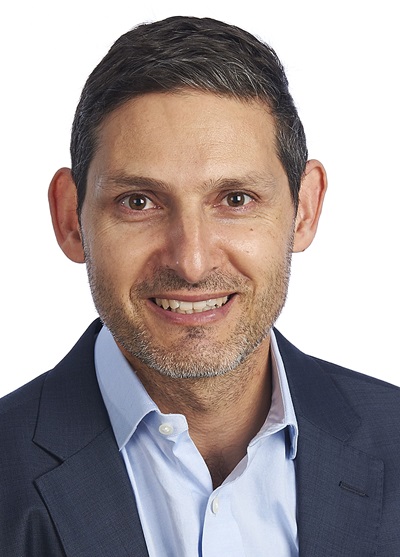
Prof Jonathan Karpeloswsky
A recipient of the prestigious John Mitchell Crouch Fellowship from the Royal Australasian College of Surgeons (RACS), Professor Jonathan Karpelowsky says he’s "very honoured" by the recognition. The Fellowship supports surgeons making significant contributions to advancing surgery and medical research in their fields.
"I look at the people who've received it before me," he says. "And I feel uncomfortable to be put in the same field as them. They are incredible researchers. If I can do just a small amount compared to what they have achieved, I'd feel very privileged."
He describes the Fellowship as a beginning, not an end, and it is helping him pursue a problem that has troubled him since childhood.
Professor Karpelowsky is a paediatric surgeon specialising in paediatric solid cancers including osteosarcoma, an aggressive bone cancer that affects children and teenagers. He lost a friend to the disease when he was 11 years old. That experience stayed with him.
His research centres on "liquid biopsies"—using blood samples to detect tiny traces of cancer DNA circulating in the body. The aim is simple in theory but potentially life-changing in practice: to understand much earlier whether treatment is actually working.
At present, doctors often have to wait until surgery to know if chemotherapy has successfully reduced the cancer. "By that stage, it may be too late."
Osteosarcoma also has a tendency to return, sometimes long after treatment appears successful. His research hopes to identify whether microscopic traces of disease remain hidden even when scans look clear.
"In the blood, you look for markers of the cancer. If we could prove much earlier that you're not having a drop-off in your cancer DNA, there may be the option to switch chemotherapy earlier."
For some patients, that could mean more personalised treatment instead of a one-size-fits-all approach. "You're trying to do an adaptive response to treatment, rather than just giving the package and hoping for it."
But the research, however, is far from straightforward. Osteosarcoma is rare, making it difficult to gather enough patient samples. Unlike many adult cancers that share common genetic patterns, osteosarcoma behaves differently.
"Each osteosarcoma has unique genetic changes. So, it becomes very patient-specific."
Despite the challenges, liquid biopsy technology is already being explored in other childhood cancers, including neuroblastoma and Ewing sarcoma. Professor Karpelowsky believes precision medicine will continue to reshape paediatric care over the coming decade, though not in a uniform way.
"It's how you use the tool to try and offer the best outcome, but at the lowest morbidity possible."
Right now, most children receive largely the same chemotherapy treatment whether they are in Sydney, Melbourne or elsewhere. Professor Karpelowsky wants to change that.
He wants treatment to adapt to each child and each tumour.
"It's the ability to try that treatment, but if it's not working, change tack much earlier on. That's where the personalisation comes in."
Much of his work now sits at the intersection of surgery, laboratory science and patient care. He believes surgeons are uniquely placed to become researchers because they understand both the disease and the human reality behind it.
"We are really able to bridge clinical care and the lab and come up with a good question. Only with a good question can you find something that's going to have an impact."
Professor Karpelowsky says his journey into paediatric surgery and research was shaped by mentorship and curiosity.
"Having good mentors who inspire you, who demonstrate the joy of it and demonstrate what can be achieved—I've been very privileged to have that."
But ultimately, it is the patients and families who continue to motivate him. He speaks warmly of the resilience of children undergoing treatment, saying paediatric patients often cope with remarkable strength despite everything they endure.
One former patient recently wrote to him. Now 28, the man had battled bone cancer as a child.
"He wrote to me 14 years later to say, 'This is where I am, this is what I'm doing now’. And I knew him as a 13-year-old boy."
Moments like that continue to fuel a career shaped by curiosity, mentorship and years of research that may never truly end.
"I would love to say we're going to get to the end of it in my career, but I don't think we will."
When asked how he balances surgery, research and personal life, Professor Karpelowsky says, "I don't. You integrate it."