2026 | Volume 27 | Issue 4
Basic surgical skills and equipment can often save life and limb even in dire situations.
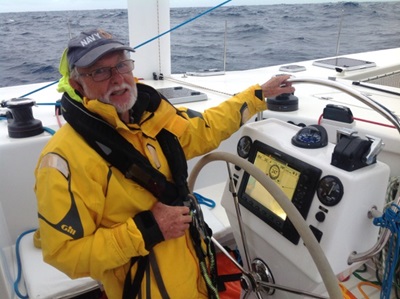
Associate Professor Hamish Foster is a retired general surgeon who has worked for many years in the Indo-Pacific and Papua New Guinea (PNG). He has served with the Royal Australian Navy (RAN) in Vietnam, the Persian Gulf, the Solomon Islands, Bougainville and Aceh, caring for patients in some of the world's most resource-limited and remote settings.
Those experiences have taught Associate Professor Foster—a keen adopter of new surgical techniques and technology—an important lesson. Technology is continuing to transform surgery, but there are still many situations where basic techniques and equipment are essential.
As surgical practice has evolved, fewer surgeons have regular opportunities to work without power, diathermy, staples or laparoscopic equipment, making these skills increasingly important to maintain for remote and resource-limited settings
"The best available surgical robot is still your hands," he says.
Now, through a gift to the RACS Foundation for Surgery, Associate Professor Foster hopes to help prepare the next generation of surgeons for those moments.
He wants to encourage debate around the practical skills, judgement and adaptability needed for humanitarian, military and remote practice.
Learning through experience
Associate Professor Foster's career has taken him into multiple environments where sub-specialist support, sophisticated equipment and modern operating conditions simply did not exist.
Early in his career, he trained in PNG under renowned surgeon Dr Ken Clezy who was truly a “specialist general surgeon”, comfortable operating on any part of the body.
"There were no sub-specialised surgeons in PNG at that time", he says. "We all tackled everything that presented."
This lesson stayed with him throughout a career spanning military service, trauma surgery, and decades working across the Indo-Pacific, before returning to regional and later rural surgery in New South Wales.
Modern surgery has become increasingly specialised, but Associate Professor Foster says remote practice often demands the opposite.
"Surgeons may be the only specialist available, illustrating the aphorism that ‘A surgeon is a physician who can cut’. They must manage whatever arrives through the hospital door. Some things simply won't wait."
Defining essential skills
Throughout his career, Associate Professor Foster repeatedly encountered surgeons working alone in poorly resourced hospitals. They were faced with regularly managing patients with major surgical emergencies and life-threatening injuries using only basic resources.
Immediate or salvage surgery is essential to save lives before medevac to major surgical centres.
He believes these situations require broader range of competencies than are routinely needed in many contemporary surgical practices.
Associate Professor Foster says modern surgery increasingly relies on sophisticated technology, which has transformed patient care and outcomes. However, he believes surgeons working in remote, humanitarian and military settings also need the ability to adapt when those resources are unavailable.
As technology becomes more integrated into surgical practice, there can be fewer opportunities to use some traditional techniques," he says. "For surgeons working in resource-limited settings, it's important to maintain those fundamental skills alongside technological expertise."
He believes surgeons preparing for remote, humanitarian or military deployment need extra training in both appropriate technical and non-technical skills.
Communication, situational awareness, leadership, decision making, preparation, and adaptability are as important as operative skills.
A lesson from the field
One operation aboard a RAN ship perfectly captures the mindset Associate Professor Foster believes surgeons need.
A man presented with an infected gunshot wound to the forearm involving both radius and ulna. Amputation was considered, as no external fixature was available onboard the ship.
Rather than abandoning the procedure, the surgeons liaised with the ship's engineers who fabricated stainless steel pins and rods for an innovative fixature. The operation was performed in the Junior Sailors' Mess as the ship had no operating theatre.
The patient and his arm survived. Four years later when Associate Professor Foster returned, the man sought him out. His arm had healed thanks to the dressings and wound care for more than a year by local nurses in his mountain village.
The ability to adapt didn't just allow that man to keep his arm; it may also have saved his life.
For Associate Professor Foster, the story demonstrates that resource limitations demand ingenuity rather than abandoning an essential operation.
Building future readiness
Now, through a gift to the RACS Foundation for Surgery, Associate Professor Foster hopes to support RACS Global Health initiatives, particularly training in essential skills for surgeons operating in remote and austere circumstances in Australia and neighbouring regions.
He has heard many requests over the years for such a resource, but so far hasn’t been able to locate a suitable one. "Now seems the time to tackle this task and come up with relevant lists for each different surgical situation likely in remote and demanding areas", he says.
Before deciding on a particular deployment, locum, job offer or career, Trainees and surgeons could compare their skills against the checklist and identify gaps requiring further training.
Associate Professor Foster hopes the list will stimulate discussion among Trainees and Fellows about how they should prepare for these increasingly common roles.
The resource could also help guide, employers, humanitarian organisations, and Defence Forces in Australia and the Pacific when selecting and mentoring surgeons for deployment.
Associate Professor Foster’s advice for future surgeons remains simple.
"Learn the basics and revisit them throughout your career," he says. "Master the fundamentals early and continue developing them as your practice evolves and technology becomes an increasingly important part of surgical care."
"If you can adapt, think clearly and operate with your own hands when technology isn't available, you'll achieve good outcomes for patients almost anywhere."