2026 | Volume 27 | Issue 4
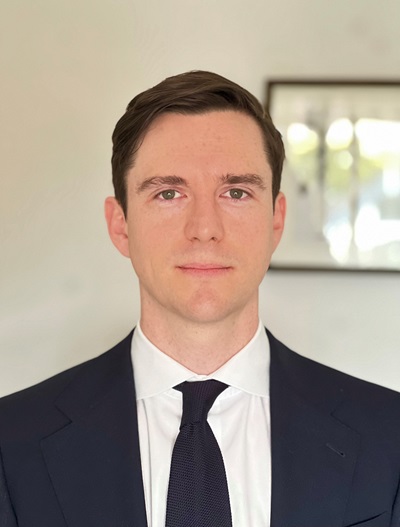
Dr Mulcahy
When Dr Michael Mulcahy, FRACS received the RACS Stuart Morson Neurosurgery Grant, he saw it as more than financial support. He saw it as an opportunity—and a responsibility—to honour a neurosurgeon's legacy by learning, sharing knowledge and helping the next generation grow.
"I was humbled to be chosen," he says. "I realised the best thing I could do was learn as much as possible, bring that knowledge home, and pass it on to the next generation—just as Stuart Morson's family has done for me."
The Stuart Morson Neurosurgery Grant supports promising neurosurgeons to undertake advanced training overseas. For Dr Mulcahy, it meant a one-year Combined Spine Fellowship at the University of Calgary, one of Canada's leading academic spine centres.
The Fellowship exposed him to every aspect of modern spine surgery through four specialist rotations: degenerative conditions, spinal deformity, tumour surgery, and minimally invasive and endoscopic surgery. The centre serves a population of around 1.5 million people, with three or four spinal operating theatres running every day.
"The volume and breadth of experience were unlike anything I'd experienced before," he says.
Among the many memorable cases, one patient left a lasting impression. A woman with a large cervical spine tumour required complex multidisciplinary treatment involving neurosurgery, orthopaedic surgery, ear, nose and throat surgery, plastic surgery and intensive care.
While the surgery itself was complex, it was the lead surgeon's approach that stayed with Dr Mulcahy. "He created a collegiate atmosphere. Rather than simply telling everyone what to do, he recognised the expertise of each person involved and used every resource available to achieve the best outcome for the patient. That taught me a great deal about leading complex spinal cases."
The Fellowship also introduced him to new approaches that he believes can improve care for Australian patients.
One was Calgary's advanced endoscopic spine surgery program, integrated with its Enhanced Recovery After Surgery (ERAS) pathway. Using minimally invasive techniques and carefully structured perioperative protocols, selected patients undergoing single-level spinal fusion were able to return home just four hours after surgery.
"I really believe ERAS will play an increasingly important role in spine surgery," Dr Mulcahy says. "It delivered excellent outcomes for patients in Calgary, and I'd like to build on that experience here."
Equally influential was Calgary's internationally recognised spinal deformity program. Working alongside orthopaedic spine surgeons gave Dr Mulcahy exposure to principles of spinal alignment and reconstruction that had not featured as prominently during his neurosurgical training.
"These were things I hadn't really experienced before. I am excited to incorporate those principles into my practice in Australia."
The learning extended well beyond the operating theatre.
The spine unit held structured educational rounds four days each week, bringing surgeons and trainees together to review cases, discuss research and debate new techniques.
"It was a fantastic educational program that everyone was proud of. I'd like to develop something similar here in Australia—an enduring program that provides meaningful educational opportunities for registrars and Fellows.”
Dr Mulcahy's interest in neurosurgery began while studying medicine at the University of Newcastle, where neurosurgical mentors inspired him to pursue the specialty.
"It's a privilege to operate on the brain and the spine. The field is constantly evolving. Technology is changing rapidly, and we're always learning."
As his training progressed, spine surgery increasingly appealed to him because of its technical demands, intellectual complexity and the pace of innovation.
Now back in Sydney, Dr Mulcahy has joined Westmead Public Hospital and is establishing consultant practice while introducing many of the principles he learned in Canada. Alongside expanding endoscopic surgery and enhanced recovery pathways, he hopes to strengthen education for future Trainees.
Ultimately, what motivates him is the difference spine surgery can make to patients' lives.
"You can relieve someone's pain, restore their independence, and allow them to return to the activities that matter to them. Sometimes you perform a straightforward operation, and the patient's pain disappears immediately. Seeing that is incredibly rewarding."
He is equally aware that sound surgical judgement sometimes means deciding not to operate.
"Sometimes surgery isn't the answer. That's one of the hardest parts of the job because we all want to help our patients, but we don't have all the answers, and we have to be honest about the limits of what surgery can achieve."
That willingness to keep learning, to work collaboratively, and to share knowledge with others reflects the spirit of the Stuart Morson Neurosurgery Grant.
"I want to make sure what I've learned can be taught here in Australia," Dr Mulcahy says. "That's how we honour the grant, by passing those lessons on to the next generation."