2026 | Volume 27 | Issue 4
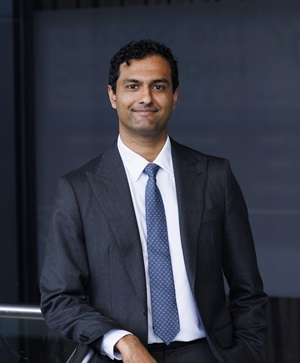
Dr Rithvik Reddy
When twin brothers Artie and Jack Porter heard sound for the first time following an Australian-first simultaneous cochlear implant procedure, the story captured national attention. For the Sydney surgeon who helped make it happen, however, the most memorable part came afterwards: watching a video sent by their mother showing one of the boys hearing a xylophone for the very first time.
"It's a favourite," says Dr Rithvik Reddy, FRACS. "I'll keep watching it."
The operation made headlines in June, but for Dr Reddy it reflected something deeper: a career dedicated to restoring hearing and helping patients reconnect with the world around them. Based in Sydney, he specialises in complex otology, auditory implants, lateral skull base surgery and paediatric ENT.
For Dr Reddy, one of the most rewarding moments in his career did not happen in an operating theatre. It came in London, after a cochlear implant procedure, when a patient who had lost hearing in both ears suddenly smiled and said, "Oh hey, you're Australian. I can now hear it in your accent."
That moment captures why Dr Reddy chose a career restoring hearing. His path to ENT began during a medical school elective in Pokhara, Nepal. General Surgery was full, so he wandered into the hospital library, noticed the ENT section was larger than expected and spent eight weeks there out of curiosity.
"The clinicians were diagnosing conditions like cholesteatoma from the smell of the discharge. They would swab the ear, smell it, make a diagnosis and the patient would go on to have surgery. It felt like watching magic."
The elective sparked a lifelong fascination with ear surgery and hearing restoration.
Earning FRACS remains one of Dr Reddy's proudest achievements—five years of specialist training and an examination that "engulfs your whole life and tests the limits of your knowledge." But Fellowship is not the end of learning; it marks the beginning of lifelong, self-directed professional growth.
For Dr Reddy, those five letters represent far more than technical excellence. They embody the RACS core competencies. As Supervisor of Training at Sydney Children's Hospital, he sees the culture they help create. "RACS has really driven how we treat our juniors, whether it's inviting them for dinner or out for coffee or how we engage them with research."
RACS has built a community grounded in strong mentorship, Trainee support and genuine professional standards. "Any patient who sees FRACS behind a surgeon's name knows they're dealing with the real deal."
Those letters also represent work patients rarely see. "The operation is the smallest part of a patient's journey. The real work happens during sleepless nights, mentally rehearsing procedures and wrestling with complex decisions."
The twin cochlear implant surgeries reflected that unseen effort. "There wasn't anything extraordinary about the surgery. We do cochlear implants every week but this was a logistical feat," Dr Reddy says.
The team had to secure eight hours of operating time for premature twins, coordinate theatre and anaesthetic teams, and on the day, Dr Reddy was called away to help manage an airway emergency before returning to complete the procedures.
"It was a good reminder of why we do the work that we do."
The operation also helped secure ongoing government funding for New South Wales' early intervention hearing program.
Eight months ago, Dr Reddy became a father. "I see my daughter in every child I treat. It makes it more challenging, but I think it makes me a better clinician."
Cochlear implants remain at the heart of his work. Pioneered in Australia, they transform the lives of people with profound hearing loss. "Hearing affects confidence, education, employment, relationships and mental health."
He recalls one patient describing himself as "a pot plant," sitting silently through family conversations before his implant. Three months after surgery, the man returned smiling. "They were so happy they no longer had to repeat themselves. There weren't arguments in the household."
In 2023 and 2024, Dr Reddy completed advanced Fellowship training at Guy's and St Thomas' Hospital in London. He returned with a network of mentors he still consults on complex cases and a renewed belief that professional development is an ongoing conversation, not a checkbox.
The field is evolving fast. Gene therapy to restore hearing in children is already being trialled, and Dr Reddy hopes hearing loss will one day lose its stigma. "When people wear glasses, it’s considered okay, but when they wear hearing aids, suddenly it becomes this big thing. That's really unfair."
Looking ahead, Dr Reddy hopes to leave future surgeons with one simple principle: "Treat patients as you would want your own family members treated. Take time to listen. Think about the problem and how you can actually help them."