2026 | Volume 27 | Issue 4
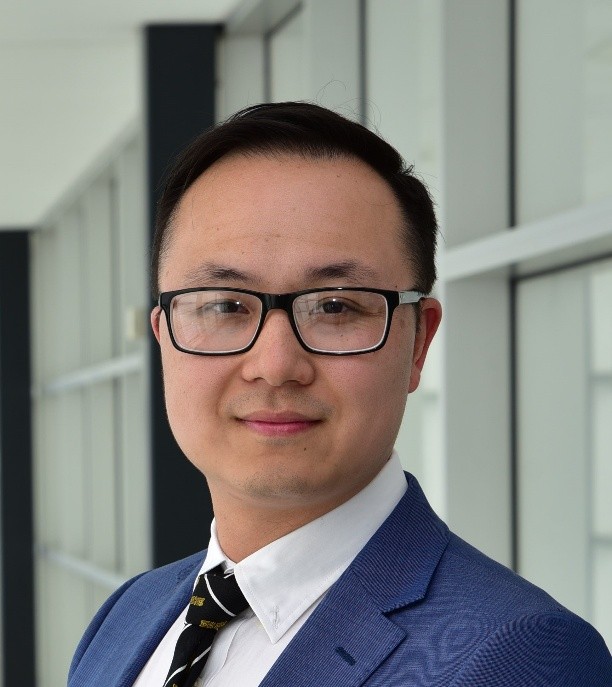
A/Prof David Liu
Associate Professor David Liu shared his research on understanding and addressing potentially preventable mortality following oesophagogastric cancer surgery at a webinar for the South Australian and Tasmanian audits of surgical mortality (SAASM/TASM).
He is an oesophagogastric cancer and general surgeon practicing at Austin Health and the Peter MacCallum Cancer Centre in Victoria. He holds an academic appointment at the Department of Surgery, University of Melbourne.
Associate Professor Liu is passionate about service innovation, translational biology and clinical collaborative research. He focusses on benign and malignant upper gastrointestinal diseases as well as general surgical conditions. He is widely published and has a strong track record for attracting research funding. He leads the Victorian Interventional Research and Trials Unit at Austin Health, which canvases a wide portfolio of phase 1–3 clinical trials that are investigator-led and industry sponsored. He is also clinical lead within the Tumorigenesis and Cancer Therapeutics Laboratory at Peter MacCallum, driving translational cancer research into the clinic.
In 2023 you published a paper exploring potentially preventable mortality in oesophagogastric patients using Australian and New Zealand Audit of Surgical Mortality (ANZASM) data. What inspired this research?
In 2020, I undertook an upper GI surgical Fellowship at Flinders Medical Centre, South Australia. My mentors—Professor David Watson and Dr Tim Bright—and I were really interested in understanding the factors that contributed to preventable mortality following major oesophagogastric cancer surgery. These elective operations carry the highest rate of perioperative mortality in our field of expertise.
Furthermore, this mortality rate varies significantly between centres across Australia. We hoped that by understanding preventable mortality, we can systematically derive strategies to minimise these terrible outcomes.
The thematic analysis you undertook into the types of issues being reported in oesophagogastric mortality (potentially preventable) seems to touch on nontechnical surgical skills. Is this an area you have an active interest in?
Absolutely. Oesophagogastric cancer surgeries are among the most complex surgeries undertaken on the human body and these operations are often performed in patients with suboptimal levels of fitness. Consequently, successful outcomes from these operations demand teamwork and multifaceted expertise. These elements must be evident throughout the pre-, intra- and postoperative patient journey. Ultimately, surgical skills only comprise a fraction of the equation that delivers good outcomes for our patients.
The Strong for Oesophagogastric Cancer Surgery (SOCS) trial outlined a comprehensive prehabilitation program prior to surgery, with clear reported benefits. Do benefits from these programs follow a linear pathway?
The SOCS trial findings demonstrate that multifaceted prehabilitation translates to improved clinical outcomes for patients undergoing oesophagogastric cancer surgery, particularly for patients who experienced major perioperative complications. This is a novel finding in this space of research. In short, being physically, nutritionally and mentally fit pre-op means patients have more reserve to surmount complications when they occur. This limits the conversion of complication to morbidity and mortality.
Does a prehabilitation program have to be specific to each specialty or can a generic approach work for other types of major surgery? What have you found to be the barriers to setting up a comprehensive prehabilitation program?
The concept of prehabilitation should apply to all types of major surgery, beyond cancer surgery and gastrointestinal surgery. Increasing data exist at the mechanistic level demonstrating the importance of prehabilitation on immune and cellular function, which, in turn, impacts short to long-term patient outcomes.
I believe prehabilitation programs need to be adapted to patient, disease, institutional factors and geographical factors to encourage patient compliance and maximise program feasibility. This has been our experience, and we are constantly searching for strategies to improve our service addressing these domains.
The major hurdles in setting up a comprehensive prehabilitation program are funding and personnel. We were fortunate to have financial support from North Eastern Melbourne Integrated Cancer Services (via a service improvement grant) and from the Austin Medical Research Foundation (via the grants-in-aid program). Importantly, I am constantly amazed and fortunate to be surrounded by a team of very dedicated clinicians, nurses and allied health experts who really helped carry our SOCS program from a clinical trial to now being our standard of care.
What research or endeavours have you been involved in since?
I lead a translational research program that focuses on improving outcomes for patients with gastroesophageal cancer. Our projects bridge the bench to bedside, to policy and practice. Our efforts range from detecting cancer early, deriving novel therapeutics, understanding mechanisms of disease development and treatment resistance, optimising surgical and perioperative practices, personalising cancer care pathways, and improving survivor experiences. These are currently being delivered through our laboratory, our clinical trials unit, and consumer advocacy groups in collaboration with government, industry, health networks and research institutes within Australia and abroad.
Watch the full webinar: It gets complicated