2026 | Volume 27 | Issue 5
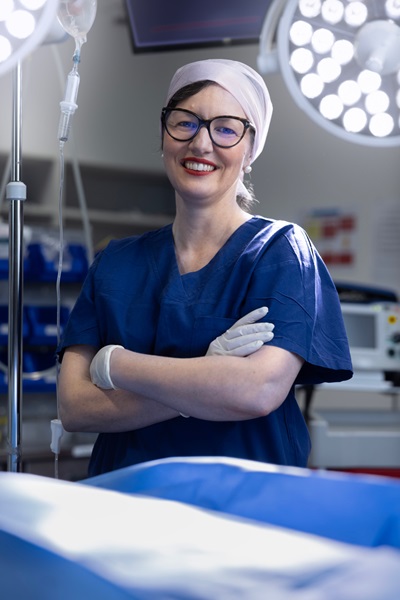
Associate Professor Sarah Aitken has spent her career bringing the classroom into the operating theatre. A vascular surgeon, researcher and educator, she treats those roles as interconnected opportunities for learning.
Associate Professor Aitken will speak at the RACS Annual Research Conference (ARC) in November on innovation in medical education. Her starting point is that good research alone does not create change. Impact comes from the people, systems and structures that allow ideas to take hold, as well as the deliberate efforts to build capacity and push boundaries.
"If we can train surgeons to think bigger, and be involved in the future generation of surgeons, then we have this really powerful lever," she says. Practice improves when clinicians are taught to apply research in real settings.
Associate Professor Aitken’s clinical research began with older patients and the bias they encounter inside surgical services. Big data epidemiology showed the gaps; she then worked with geriatrics to redesign a pioneering model of care.
Embedding a geriatrician into surgical service delivery cut hospital-acquired geriatric complications in older patients by 20 per cent.
But results depended on junior doctors implementing the model of care on the ward each day. So, clinical innovation hinged on the quality of education, built on ward-based teaching and micro-teaching techniques.
That experience has shaped how she now approaches subsequent translational research, with her comprehensive research program addressing inequities in care by asking what clinicians are taught and how those lessons shape the decisions they make. For instance, take what is taught about peripheral artery disease.
"The multiple-choice questions (MCQ) for patients with peripheral artery disease are always a 75-year-old white male smoker," she says.
Students absorb that picture from day one; it does not match contemporary epidemiology. Women make up more than half of all patients with peripheral artery disease, and most do not smoke. However, students develop a mental model that is based on the MCQ and it takes four times longer for women to receive a diagnosis as they don’t fit that picture. That research now informs systems giving clinicians the time, insight and training to deliver better care.
Professional identity formation is part of education research, she says—moving beyond technical training to include diversity, inclusion and belonging creates safe spaces for healing and learning.
Associate Professor Aitken spent last year in the US on a Commonwealth Fund Harkness Fellowship, visiting 16 institutions. The experience shaped her thinking about leadership and institutional culture. The strongest organisations combined a sense of security with an openness to change, new ideas and their communities.
"You can keep things out, bring things in, grow, expand, but still give security," she says. Institutions managing that balance were thriving, their leaders genuinely engaged.
She is wary of the word innovation, finding it too commercial and too tied to technology. Robotic surgery, artificial intelligence and 3D printing are tools rather than destinations.
"They're just tools to understand how community and people work together," she says. Patients worried about cost of living, climate or politics carry those worries into the consulting room.
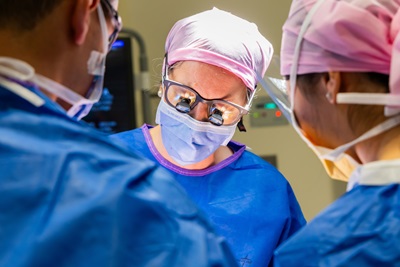
Vascular surgery is her clearest evidence that education research can shift a workforce. Five years ago, women made up roughly 10 per cent of vascular Trainees. They now sit at 42 per cent, surpassing the specialty's 40 per cent target this year. The changes were deliberate—restructured interviews, equal gender representation among interviewers, reformed parental leave, and problem solving to enable success.
Accreditation now carries a condition: hospitals accept a part-time Trainee or forgo one. Senior women also invested personally in the next cohort, and that generation soon began doing the same.
"We put in education theories that drove the changes, and we didn't just make them up," she says.
Associate Professor Aitken wants the next generation to value mental agility above any technical skill. Cynicism, burnout and overwork produce rigidity, which destroys the creativity adaptation requires.
Her one bold change would put patients' voices into the governance of medical education. The importance of representation was brought home after this year's medical school interviews, which saw record numbers of First Nations students accepted. She shared the news with one patient, who cried.
"I didn't anticipate that I would be sitting there crying with her," she says. A clinic now rarely passes without a patient asking how the medical students are going—a perfect illustration of an integrated, responsive health system, serving its communities.