2026 | Volume 27 | Issue 5
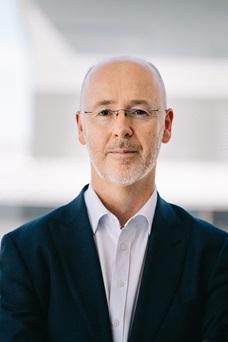
A/Prof Michael Talbot
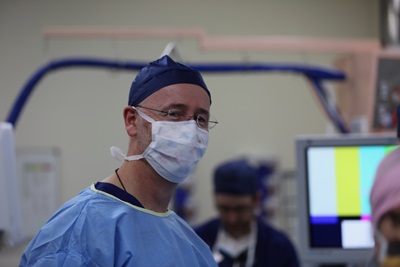
Associate Professor Michael Talbot has spent his Saturday afternoon performing a robotic oesophagectomy on a morbidly obese patient with lower oesophageal cancer.
It is complex surgery using technology that barely featured in Australian operating theatres when his surgical career began.
Associate Professor Talbot would eventually pioneer robotic upper gastrointestinal and bariatric surgery in Australia.
But his interest in robotics came from the same question that has driven his research throughout his career: can we do this better?
Since 2004, he has consciously challenged himself to learn and introduce a new procedure each year, using presentations, audits and research projects to critically assess whether those innovations truly benefited patients.
“Every year since I started as a consultant, I decided I would do something new,” he says.
That curiosity has taken him from introducing new procedures to testing his own assumptions, sometimes discovering they were wrong.
It will also underpin his presentation at the RACS Annual Research Conference in November on combining research and innovation with private practice.
Questioning accepted practice
Associate Professor Talbot’s interest in research began during training, when moving between hospitals exposed him to different surgical approaches.
The variation in practice from one centre to the next sparked his curiosity. If evidence-based medicine was guiding surgical decision-making, he wondered, why were surgeons approaching the same problems in such different ways?
Each hospital had its own way of performing procedures, with surgeons confident their particular approach was justified.
He began questioning why practices differed and whether sufficient clinical evidence existed to guide surgeons towards more consistent approaches.
Rather than viewing research and clinical practice as competing priorities, he made research part of his surgical work.
Early in his consultant career, he and colleagues introduced sleeve gastrectomy when gastric banding remained the dominant approach.
“We created a big drive to report the experience to colleagues,” he says.
“If you are doing something new, you have to report it to reassure people you are doing the right thing.”
Presenting his findings to other surgeons also became an important way of testing his own thinking.
When colleagues disagreed, he considered whether he had explained the idea poorly, misunderstood the evidence or was simply wrong.
Proving yourself wrong
Some of Associate Professor Talbot’s most satisfying research has done exactly that—proved his clinical assumptions wrong.
“All research is part of motivated reasoning. You have a hunch and think there’s enough evidence to see whether it’s correct,” he says.
“It’s always interesting when you get an answer opposite to what you think you will find.”
One example involved using different surgical techniques according to the size of a patient’s hiatus hernia.
He believed smaller hernias did not require the same approach, until reviewing his outcomes challenged that assumption.
The smaller hernias had higher recurrence rates, showing how clinical evidence can challenge even an experienced surgeon’s instincts.
For Associate Professor Talbot, research provides an opportunity to keep questioning practice and looking for better patient outcomes.
An oesophageal laboratory established almost 20 years ago has helped investigate problems conventional imaging may fail to explain.
His work also explores endoscopic and minimally invasive approaches designed to reduce the disruption surgery can cause patients.
“It’s trying to turn a good thing into a better thing,” he says.
Finding time for research
Curiosity alone, however, does not overcome the practical difficulties of combining research with a busy private practice.
Time remains one of the greatest barriers, particularly when research is unpaid and receives limited organisational support.
Associate Professor Talbot says collaboration can help share workloads while improving patient recruitment, data collection and access to funding.
He also established a foundation to provide research funding and support Trainees undertaking their own projects.
Seeing junior researchers complete projects and develop their own enthusiasm for research has become particularly rewarding.
His advice for surgeons interested in research is simple: find someone already doing it and work alongside them.
“It’s easy to do it with somebody else,” he says.
“There are plenty of people in your situation who have found ways to make research work.”
Looking for what’s next
Associate Professor Talbot expects future surgical advances to arrive incrementally, particularly through technologies used at the bedside.
Machine learning and artificial intelligence (AI) could help clinicians recognise deteriorating patients and identify warning signs they might otherwise miss.
He also believes AI could simplify regulatory and ethics processes, reducing barriers to conducting meaningful clinical research.
Yet after more than two decades in surgery, technology is not what keeps Associate Professor Talbot curious.
It is the patients he treats and colleagues who continue questioning how surgery can deliver better outcomes.
“You step into a room with surgeons all discussing the same things and moving towards the same goal,” he says.
“It’s a great environment to be in.”