2026 | Volume 27 | Issue 5
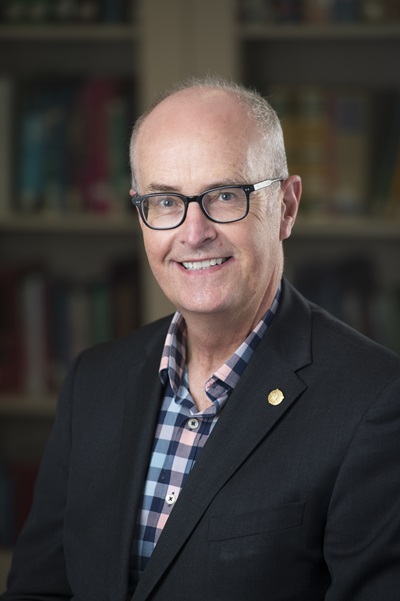
Prof Julian Smith
For Professor Julian Smith, the purpose of surgical research is simple: better care for patients.
"Research matters because it ultimately impacts patient care. No matter what the research is, it should be directed towards making the care of patients better," he says.
Professor Smith is editor-in-chief of the ANZ Journal of Surgery, Head of Monash University's Department of Surgery (School of Clinical Sciences) and the Senior Cardiothoracic Surgeon in the Department of Cardiothoracic Surgery at Monash Health. Across these roles, he has a broad view of how surgical research is evolving.
What excites him is its breadth, quality and increasingly collaborative nature across Australia and Aotearoa New Zealand. He believes the future of surgical research is increasingly collaborative. Multicentre trials, registry-based studies and health services research now sit alongside advances in minimally invasive surgery, robotic-assisted surgery and artificial intelligence (AI).
But what excites him most is where the questions are coming from. "They are being asked by our patients and the health systems we work in: can things be done better, simpler and safer? Can surgery be avoided in some situations?"
Professor Smith points to the impact research has already had on patient care, highlighting the bionic ear, a major Australian contribution to global healthcare, and laparoscopy, which transformed abdominal surgery across multiple specialties. He also mentions the role surgeons in a number of specialties have played in transcatheter interventions as part of collaborative teams.
Impact, however, does not have to mean groundbreaking technology. Research can change a clinical guideline or how an operation is performed, prevent complications, improve patient experience, reduce unnecessary procedures, improve access and equity, and reduce costs.
Professor Smith does not believe research should be confined purely to academic surgeons. Every surgeon, he says, has an opportunity to contribute. "Even just by contributing patients to a clinical trial or providing a pathological specimen for a research project, every surgeon is actually making a contribution."
That involvement, he believes, also changes how surgeons think about their own practice. "It encourages deep thinking, asking the question: Is what I am doing the best I can do for the patient?"
Professor Smith believes Australia and Aotearoa New Zealand are well placed to pursue such questions, with health systems and databases that support research across all surgical specialties. He also welcomes the way research has become embedded in surgical training, with RACS recognising the importance of understanding research methodology and giving Trainees opportunities to experience research projects.
For all his optimism, Professor Smith has one clear concern: funding. "Funding for surgical research has been difficult, especially from the government funding agencies." Surgeons have relied on industry, private enterprise and RACS for scholarships and other research support. He also points to how few surgeons are able to dedicate a substantial part of their careers to surgical research.
As editor-in-chief of ANZ Journal of Surgery, he sees another part of the research process up close: what makes research worth publishing and, ultimately, capable of influencing practice. The journal rejects around 70 per cent of submissions, with a lack of novelty or impact accounting for at least half of those rejections. For him, it all comes back to one question: why does this research matter?
"Whenever someone is asking a research question, they need to think: Is this a new question or problem? We like to publish information that will have impact—that readers will take notice of."
There is also a pragmatism to his view of what makes research valuable. Bigger or more complex does not necessarily mean better. "If you ask a simple question that impacts patient care and you come up with a valid answer that can be easily implemented or incorporated into a guideline, that is often very successful."
Professor Smith is watching another development closely. He sees AI's potential for searching literature, identifying knowledge gaps, analysing datasets, assisting with language and checking submissions. But he is firm about where responsibility lies.
"AI has no legal right to be an author and cannot hold copyright. Human accountability for the content is essential, and that applies to the research, the submission, the peer review, and the editorial decision."
For Trainees and early career surgeons wanting to enter research, his advice is: start with a question relevant to clinical practice, find a mentor and learn the fundamentals of research design and methodology before moving on to presenting and publishing the results of the work. He also points to more than $1.6 million available in 2026 for scholarships through the RACS scholarship corpus and the RACS Foundation donations and bequests.
Ultimately, Professor Smith does not expect every surgeon to be an academic researcher. What he hopes is for all surgeons to understand research, question established practice and contribute where they can to various research endeavours.
And through all those roles—surgeon, researcher, teacher and editor—he comes back to the same measure of whether research matters.
"Why do you do surgical research? To improve the care of patients in whatever way possible."