2026 | Volume 27 | Issue 5

Dr William McGahan received the RACS 2024 Foundation for Surgery Research Scholarship. It supports surgeons and Trainees to take 12 months away from their clinical positions to undertake a research project under the supervision of an experienced investigator.
A General Surgery SET Trainee based in Queensland, Dr McGahan used the opportunity to investigate a promising new imaging modality for pancreatic cancer. This explored whether FAPI-PET/CT could improve diagnosis, staging and treatment selection for patients with one of the most challenging cancers to detect and treat.
Dr McGahan has cared for patients with pancreatic cancer since his intern year at Princess Alexandra Hospital in Brisbane. The brutality of the disease and its universally poor outcomes, he says, affects everyone involved in the care of these patients.
He says, "In more recent years, multiple family members have also been diagnosed and died from the disease, including my dad.” His father, Dr Tim McGahan was a vascular surgeon at the Princess Alexandra Hospital and a Fellow of the College. Improving early detection for people at higher risk of pancreatic cancer is now a major focus of his.
The tumour micro-environment describes the local population of cells that exists within a malignant tumour. This includes fibroblasts that are reprogrammed by the cancer to produce abnormal scar tissue, which helps the tumour invade, spread and evade the immune system. He says, "What's unique about FAPI-PET is that it primarily targets these reprogrammed fibroblasts. Imaging cancer this way can reveal very small metastatic deposits, as well as early malignant change within precursor lesions."
In patients with established pancreatic cancer, the scan changed management for a significant proportion of the study group. It detected distant metastases in patients who may otherwise have proceeded to a major, futile operation. Such surgery, he says, "will delay or prevent chemotherapy, which is really the treatment that will help those patients".
The finding he most wants to share involves about 50 patients with cystic pancreatic neoplasms of uncertain malignant potential. FAPI-PET performed well at distinguishing lesions containing advanced neoplasia, meaning high-grade dysplasia or early invasive cancer. Dr McGahan calls this result "extremely promising" and sees a potential case for using the scan in clinical practice. It could help surgeons decide which patients need a major resection and which they can safely observe.
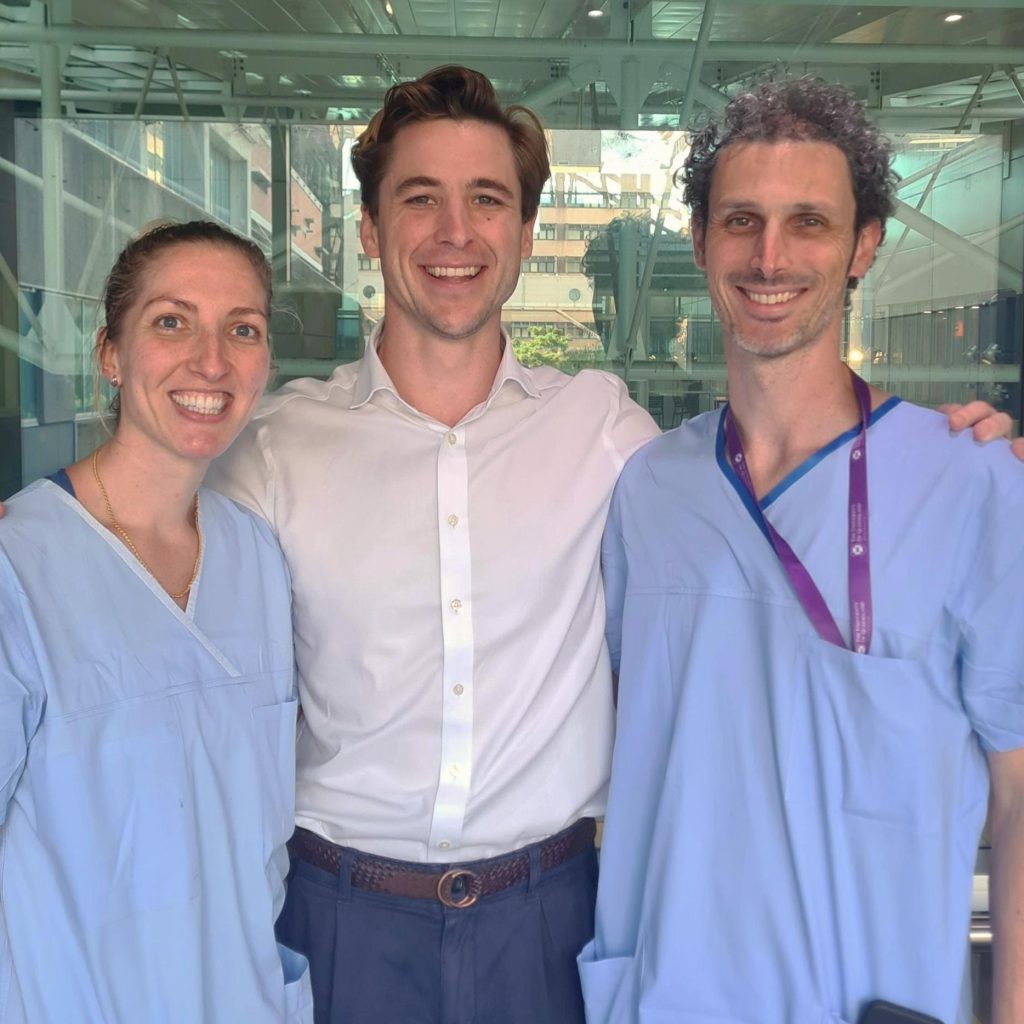
Dr McGahan (c) with Dr Dave Cavallucci (l) and Alexa Chadwick (r)
Laboratory work examining the scan's target, fibroblast activation protein (FAP), under the microscope produced one of the more unexpected findings. FAP appears earlier than expected in the progression from benign precursor lesion to cancer, first in epithelial cells. Reprogrammed fibroblasts expressed the target diffusely, but only in the later stages of tumour development.
High tracer uptake at primary and metastatic sites points to a theranostic application for FAPI-PET, which uses the same targeting molecule to deliver radiation directly to tumours. Early overseas trials have safely delivered a theranostic version to small patient groups, though effectiveness remains unproven. He says, "It's exciting to see that there are some clinical trials happening, with more promising results hopefully coming out soon."
During the scholarship year, Dr McGahan attended clinics at two Brisbane hospitals to offer eligible patients study participation. He also managed the funding, governance and compliance demands of a large multi-centre prospective study. "It would be extremely difficult if you were trying to be a full-time registrar at the same time". The experience showed him that surgeons can incorporate clinical and translational research into everyday clinical practice. Success, he says, requires time to foster ideas and buy-in from everyone in the team.
FAPI-PET remains experimental, and Dr McGahan says larger, more definitive clinical trials must come next. His team is also exploring whether the tracer can help surgeons visualise neoplasms in real-time during operations. He hopes the technology will one day improve early detection for high-risk individuals in surveillance programs.
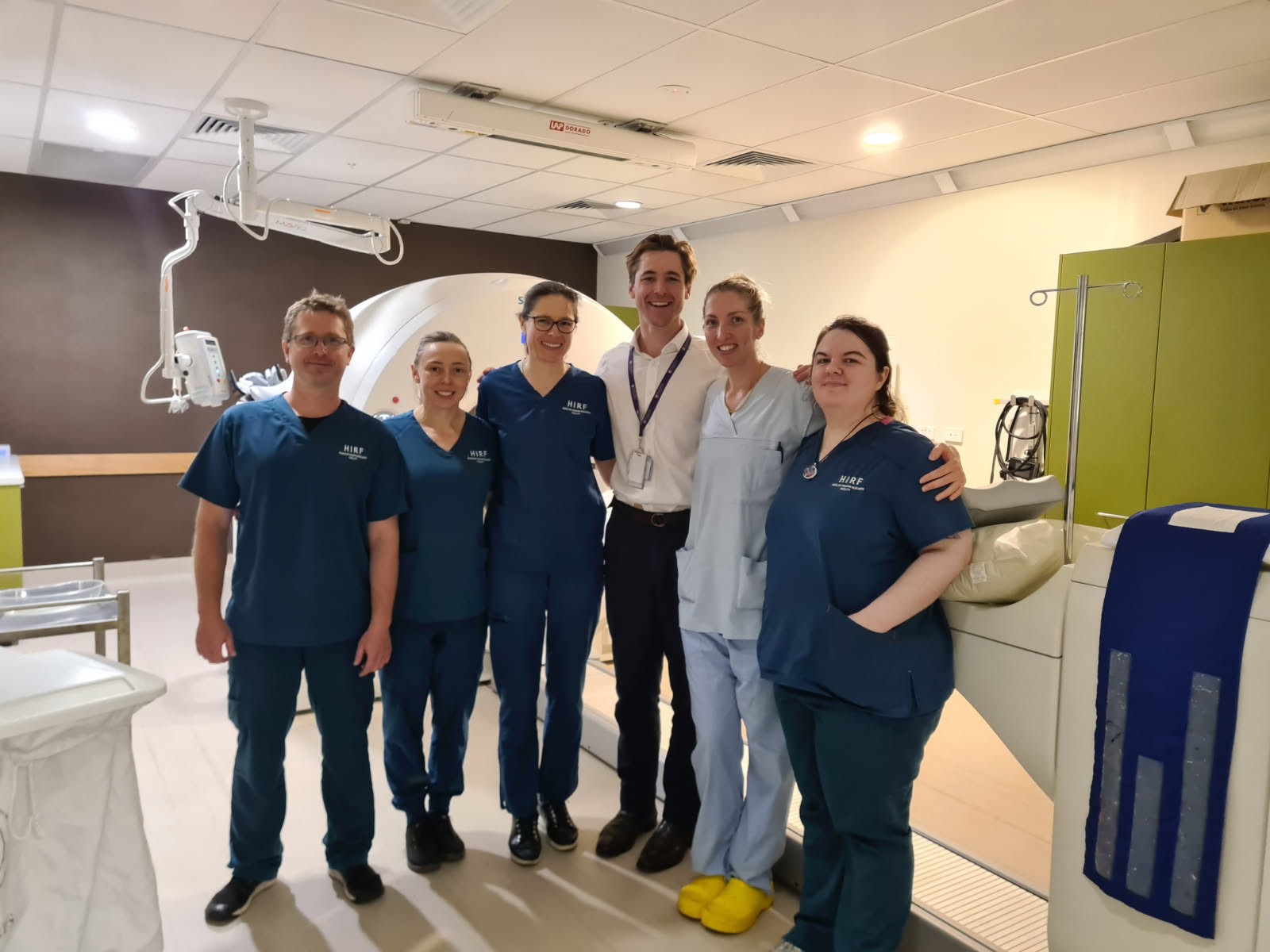
Dr McGahan with the team at Herston Imaging Research Facility
As advice to Trainees, he says, "Pursue a research question that you actually want to know the answer to." Choosing one that merely promises a quick paper, he adds, misses the key to enjoying research. He also recommends seeking mentors and collaborators beyond surgery. For him this has included nuclear physicians, biomedical scientists, nurses, medical oncologists, and anatomical pathologists, in addition to surgeon mentors.
Dr McGahan recently passed his Fellowship examination and admits that surgical training is a consuming job. Time with his wife, daughter, family and friends matters most, along with exercise, gardening and keeping the lawn mowed. "If I'm managing to fill my cup with those things outside of work, I'm pretty happy."