
On this page
Why we developed the strategy
Surgical education is changing
Growing workforce demands, changing community expectations, evolving regulatory requirements and an increasingly complex training environment are reshaping surgical education across Australia and Aotearoa New Zealand. RACS’ Surgical Pathways Strategy 2026-2030 responds to these growing pressures by strengthening training, supporting the surgical workforce and improving outcomes for patients, communities and the health system. It provides a shared, long-term vision to lead the future of surgical education across Australia and Aotearoa New Zealand.
Better training experiences
It will deliver clearer, more cost-effective pathways for Trainees, stronger partnerships across surgical education and improved training environments, supporting high-quality surgical education that benefits Trainees, surgeons, patients and communities.
Trusted, transparent and collaborative surgical education
The Strategy will also strengthen governance, accountability and partnerships across surgical education, delivering greater transparency, clearer decision-making and stronger collaboration to build trust and improve outcomes.
The Surgical Pathways Strategy will modernise surgical education and training, helping ensure the future surgical workforce is equipped to deliver safe, high-quality care where it is needed most.
How we developed the strategy
Co-designed with our partners
The Surgical Pathways Strategy has been informed by extensive consultation with Trainees, Fellows, specialty training committees, specialty societies, health services, regulators, governments and other stakeholders. This collaborative approach will continue throughout implementation, ensuring the strategy remains practical, responsive and delivers meaningful change.
We thank all contributors for their input and engagement.
Our strategy
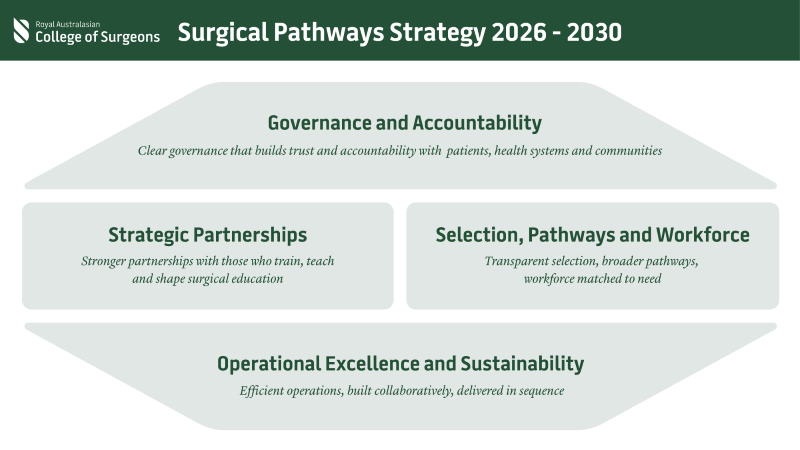
The strategy (PDF 8.49MB) focuses on four areas that will deliver lasting improvement:
- strengthened governance and accountability: so decisions are transparent, consistent and trusted, strengthening confidence in surgical education.
- stronger strategic partnerships: so surgical education is shaped collaboratively, training environments continue to improve, and education evolves alongside workforce and community needs.
- contemporary selection and training pathways: so Trainees benefit from clearer, evidence-informed pathways, while communities benefit from a workforce better aligned to where surgical care is needed most, while maintaining the standards and value of Fellowship.
- operational excellence and sustainability: strengthening the efficiency and sustainability of the surgical education system through better use of resources and data, reducing costs for Trainees and the health system, and continually improving the experience for Trainees, Fellows and specialties.
How we'll roll it out
Our work continues
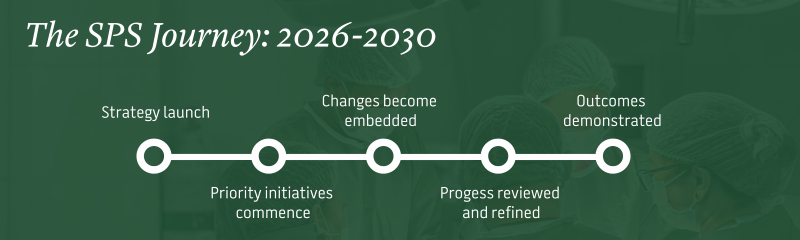
While the Strategy provides the roadmap, implementation will occur progressively between now and 2030 in collaboration with our partners.
Success will be measured not by the completion of projects, but by the tangible improvements delivered across surgical education, workforce outcomes and ultimately the care provided to patients and communities.
Questions or feedback?
The Surgical Pathways Strategy is more than a plan for change—it is a commitment to ensuring surgical education remains contemporary, trusted and sustainable, so that future generations of surgeons are equipped to deliver the highest standards of care for the communities they serve.
If you have any questions about the Strategy or have some feedback, please contact the Pathways to Fellowship team.